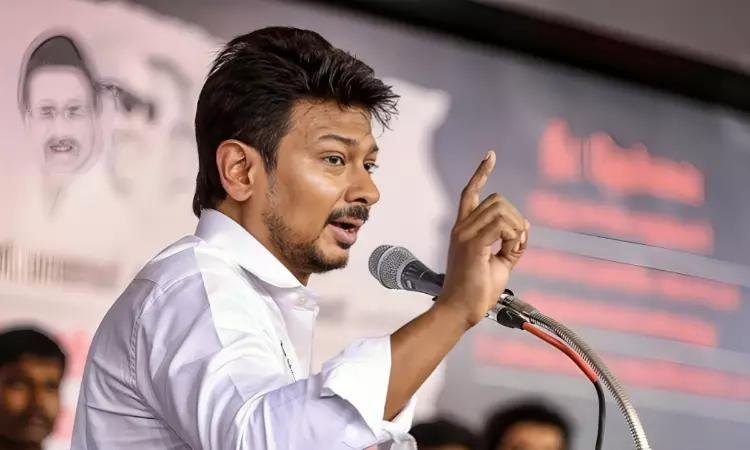
The Madras High Court has sought a detailed report regarding the asset declarations of Tamil Nadu Deputy Chief Minister Udayanidhi Stalin in connection with the upcoming 2026 Assembly elections. The court directed the Director General of Income Tax (Investigation) and the Ministry of Corporate Affairs to submit a status report on the matter.
A bench led by Chief Justice S.A. Dharmadhikari and Justice G. Arul Murugan heard a petition that raised concerns over discrepancies in the financial disclosures made by Udayanidhi Stalin in his election affidavits. The court has scheduled the next hearing for April 20, just days before the Tamil Nadu Assembly elections set to take place on April 23.
The petition was filed by a Chennai-based individual, who argued that voters have a fundamental right to access accurate and complete information about candidates contesting elections. Citing constitutional principles, the petitioner emphasized that transparency in financial disclosures is essential for voters to make informed decisions.
According to the plea, a comparison of Udayanidhi Stalin’s affidavits from 2021 and 2026 allegedly reveals inconsistencies. These include claims of missing previously declared assets, differences in corporate records, unexplained financial changes, and possible misrepresentation of transactions. The petitioner contended that such discrepancies could undermine the credibility of the election process and called for an independent investigation.
The petition also sought directions to the Election Commission of India to verify the accuracy of the financial details submitted by the candidate. Additionally, it requested a preliminary inquiry by investigative agencies into the alleged irregularities.
During the hearing, the petitioner’s counsel argued that voters deserve truthful disclosures before elections, rather than relying on post-election legal remedies. On the other hand, the Election Commission’s counsel pointed out that existing laws already provide penalties for false declarations but clarified that returning officers cannot independently verify the authenticity of such claims without a formal trial.
The case highlights ongoing concerns around transparency and accountability in electoral processes, with the court’s upcoming review expected to play a crucial role in determining the next course of action.