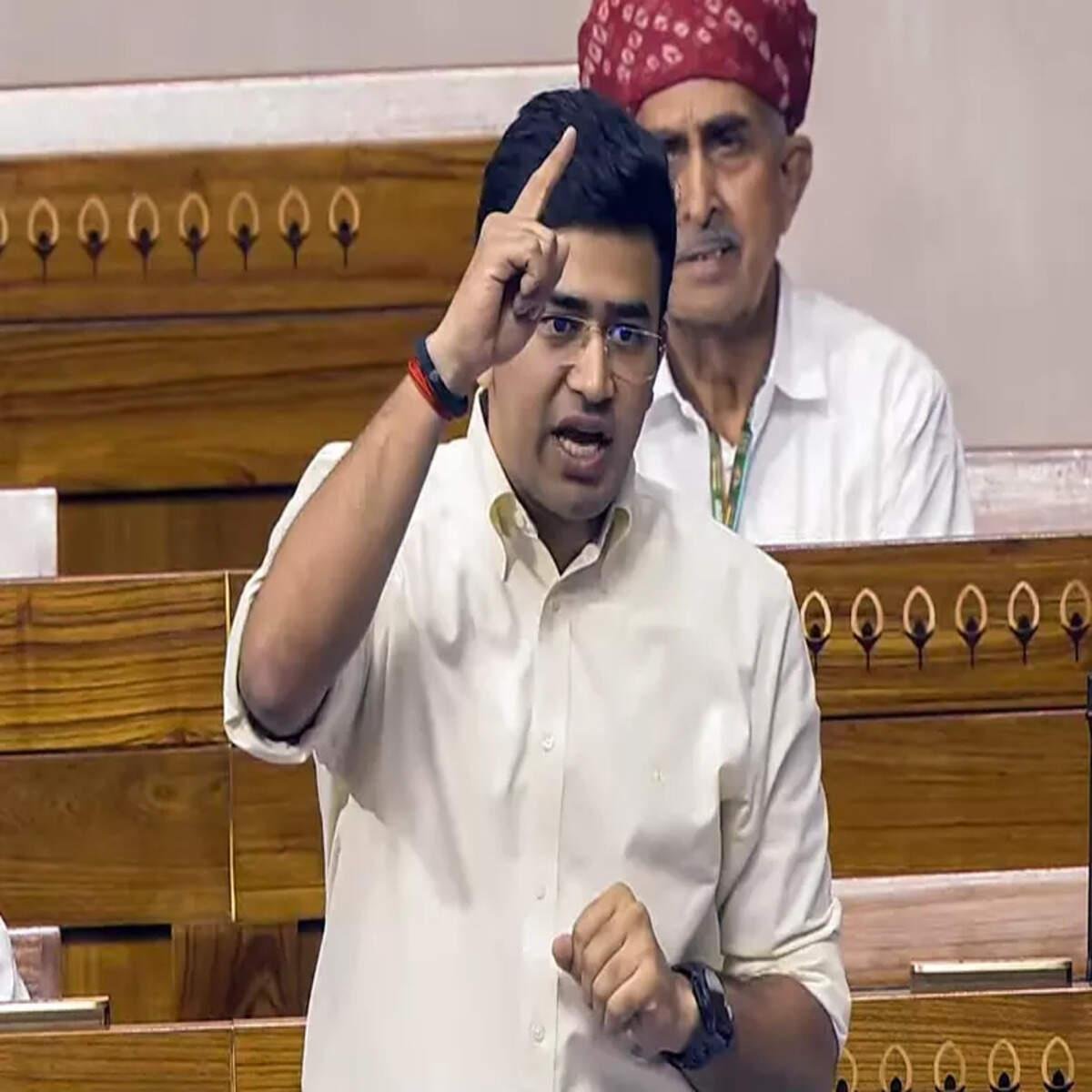
The ongoing debate around India’s proposed delimitation exercise has sparked strong reactions across the country, especially in southern states. Concerns have been raised that redrawing constituencies based on population could reduce the political influence of the South. However, BJP MP Tejasvi Surya has argued that the new plan will actually benefit these states.
Speaking during a discussion in Parliament, Surya stated that the Centre intends to increase Lok Sabha seats for all states by approximately 50%. He emphasized that this increase would be applied uniformly, ensuring that no region loses its proportional representation.
Currently, the Lok Sabha has 543 seats, but under the proposed changes, the total strength could rise to around 850 seats. Out of these, a portion will also be reserved for women as part of the broader implementation of the Women’s Reservation policy.
The main concern among southern states is that a population-based approach could favor northern states with higher population growth. Since southern states have been more effective in controlling population, they fear losing their share of representation and influence in Parliament.
However, Surya dismissed these fears, stating that the proportional share of each state would remain unchanged. Instead of losing seats, southern states would gain additional representation due to the overall expansion of the Lok Sabha.
For example, Tamil Nadu, which currently has 39 seats, could see its number rise to around 59 under the proposed formula. Similarly, Kerala’s seats could increase from 20 to about 30. Other states like Andhra Pradesh, Telangana, Karnataka, and Odisha are also expected to gain additional seats under this model.
The BJP MP explained that this approach ensures fairness while maintaining the constitutional framework. By increasing seats proportionally rather than redistributing them strictly based on population growth, the government aims to address concerns from all regions.
Despite these assurances, opposition parties remain skeptical. They argue that the use of older census data and the timing of the proposal could still disadvantage certain regions. The issue continues to be a major point of contention as Parliament debates the proposed reforms.
As discussions continue, the delimitation exercise remains a crucial topic that could reshape India’s political landscape in the coming years.