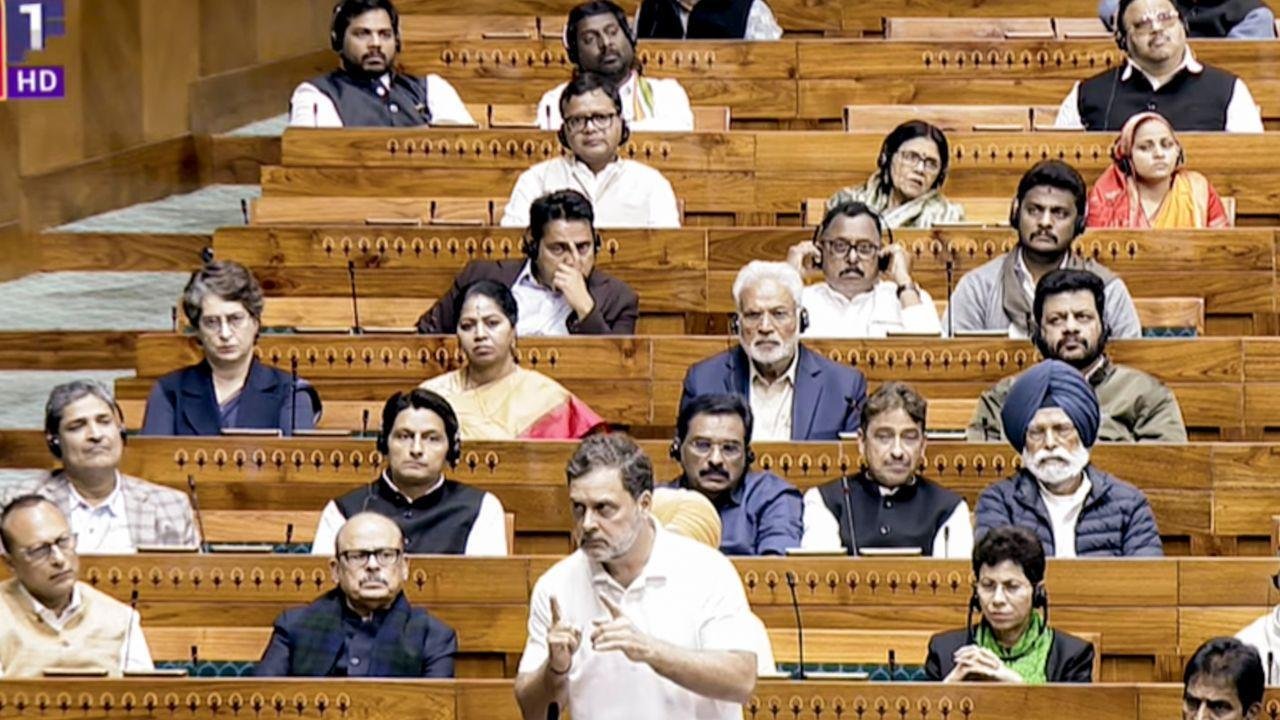
Rahul Gandhi has launched a strong attack on the central government over its move to link the delimitation exercise with the implementation of the Women’s Reservation Bill. Speaking in Parliament during a special session, Gandhi termed the move a “panic reaction” and accused the government of attempting to reshape India’s electoral map for political gain.
He alleged that the ruling government, led by Narendra Modi, is trying to project itself as pro-women ahead of key elections, particularly in states like West Bengal and Tamil Nadu where women voters play a crucial role. According to Gandhi, the timing of the decision raises serious questions about the government’s intentions.
Delimitation refers to the process of redrawing the boundaries of electoral constituencies based on population changes. Gandhi argued that linking this process with the Women’s Reservation Bill could disadvantage states that have effectively controlled population growth, especially in southern and northeastern regions. He warned that such a move could reduce their representation in Parliament.
Referring to the Women’s Reservation Bill passed in 2023, Gandhi emphasized that it had received unanimous support across political parties. “Bring back the original bill and we will support it,” he said, adding that the current approach has “nothing to do with women’s empowerment.”
He further accused the government of being reluctant to share power with marginalized communities, particularly OBCs. According to him, the changes are being driven by fear of losing political dominance. “They are trying to re-engineer the political structure of India to maintain control,” Gandhi stated.
In a sharp remark, he called the move “nothing short of anti-national,” claiming that the government is effectively telling smaller and southern states that their representation will be reduced to maintain power at the Centre. He asserted that the opposition would strongly resist any such attempt.
The government, however, has defended its stance, stating that delimitation and expansion of Lok Sabha seats are necessary to implement the women’s quota effectively by the 2029 general elections. It has also accused the opposition of opposing women’s empowerment by politicizing the issue.
Congress leader Shashi Tharoor echoed similar concerns, alleging that the government is using the Women’s Reservation Bill as a pretext to redraw constituencies in its favor. He also questioned the need to expand the Lok Sabha to around 850 seats instead of implementing reservations within the current structure.
The issue has sparked a nationwide political debate, with sharp divisions between the ruling party and the opposition. While the government frames the move as a step toward gender equality, critics argue it could significantly alter the balance of political power across states.
As the debate intensifies, the linkage between delimitation and women’s reservation is likely to remain a central political issue in the coming months, potentially influencing both parliamentary discussions and upcoming state elections.