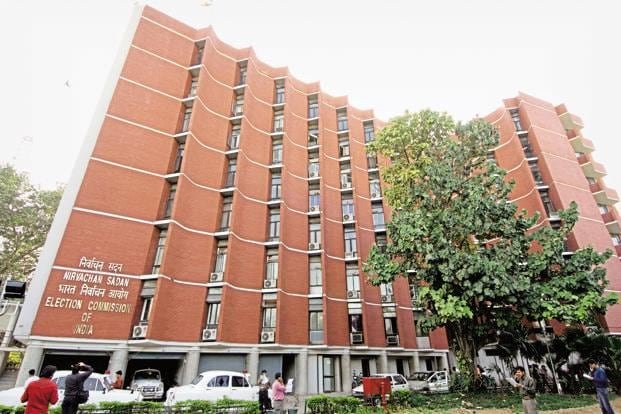
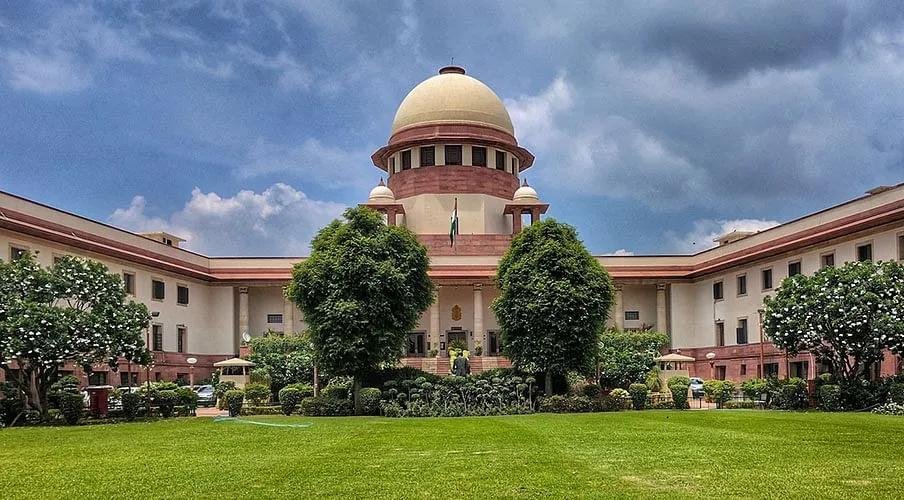
The Supreme Court of India on Thursday raised serious concerns about the process used to appoint the Chief Election Commissioner and Election Commissioners, questioning why the executive appears to have overwhelming control in such an important democratic process.
The court was hearing petitions related to the appointment mechanism of the country’s top election officials when Justice Dipankar Datta made sharp observations regarding the composition of the selection committee.
During the hearing, the bench pointed out that the Chief Justice of India is included in the committee responsible for selecting the Director of the Central Bureau of Investigation (CBI), but not in the panel that appoints the country’s election commissioners, whose role is crucial for protecting democracy and conducting free and fair elections.
Justice Datta questioned the logic behind excluding an independent authority from the election commissioner selection panel. He remarked that if judicial representation is considered necessary for selecting the CBI director to maintain the rule of law, then ensuring free and fair elections should deserve at least equal importance.
The judge clarified that the court was not specifically demanding the inclusion of the Chief Justice in the committee. However, he strongly questioned why there could not be at least one truly independent member instead of another representative linked to the executive branch of the government.
At present, the selection committee includes the Prime Minister, the Leader of the Opposition, and a Union Cabinet Minister nominated by the Prime Minister. Justice Datta observed that in practical terms, the executive could effectively dominate the process because the cabinet minister would likely support the Prime Minister’s view, creating a two-against-one situation.
“Then it is the executive controlling everything,” the judge remarked during the proceedings, highlighting concerns over institutional independence.
Attorney General R. Venkataramani, representing the Centre, responded cautiously when questioned about whether the third member of the panel would always side with the Prime Minister. He stated that such assumptions may not apply in every case and avoided making definitive comments about the functioning of the committee.
However, the bench continued to express concerns about what it described as an “executive veto” in the appointment process. The judges questioned whether Parliament had fully considered earlier Supreme Court observations and constitutional principles while framing the current law related to these appointments.
Justice Datta emphasized that while Parliament certainly has the authority to create laws, the Supreme Court remains the final interpreter of constitutional validity. He underlined that the judiciary has the responsibility to examine whether laws comply with democratic and constitutional principles.
The hearing once again brought attention to the broader debate over the independence of constitutional institutions in India. Election commissioners play a critical role in conducting elections, enforcing the model code of conduct, and ensuring fairness during the democratic process. Because of this, opposition parties and constitutional experts have often argued that the appointment system should remain insulated from excessive political influence.
The Supreme Court’s observations are likely to intensify discussions over whether the current structure provides adequate checks and balances. Critics of the present system believe that stronger independent participation in the selection process would help preserve public trust in electoral institutions.
The matter is expected to continue in court, and the final ruling could have significant implications for how India’s top election officials are appointed in the future.