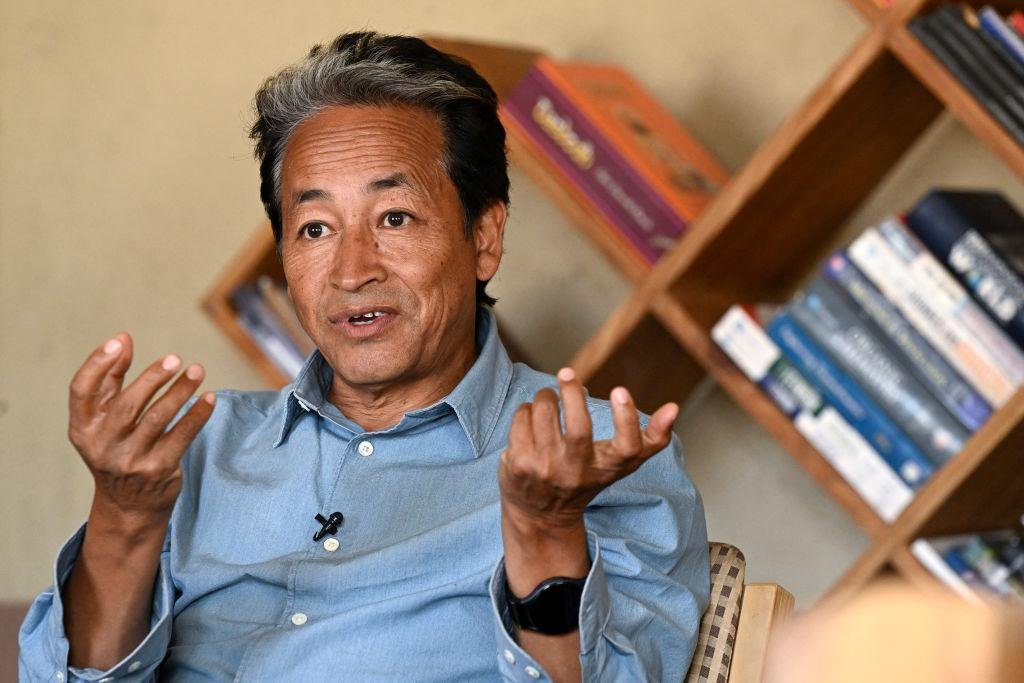
Renowned education reformer and climate activist Sonam Wangchuk has announced his support for a protest movement demanding accountability in India’s education system. The activist stated that he would join a planned demonstration in New Delhi on June 6 if no corrective action is taken by June 5 regarding ongoing concerns surrounding national examinations and educational administration.
The announcement was made through Wangchuk’s social media platforms, where he expressed concern about issues affecting millions of students across the country. According to him, the matter goes beyond individual controversies involving examinations such as NEET, CUET, and CBSE assessments. Instead, he believes the debate highlights deeper structural challenges within the education sector.
Wangchuk explained that after interacting with representatives of the movement and reviewing information shared with him, he felt the campaign was driven by genuine concerns rather than political motives. He stated that the organizers appeared committed to improving the country’s education system and raising awareness about issues faced by students.
For decades, Wangchuk has been associated with educational innovation and reform, particularly in remote and rural regions. He emphasized that his support stems from years of experience working to improve learning opportunities for students. Despite policy improvements and ambitious national goals, he expressed disappointment with the pace of implementation at the grassroots level.
The activist acknowledged that recent educational policies introduced by the government contain several positive ideas and objectives. However, he argued that strong policies alone are not enough. According to him, meaningful transformation can only occur when those policies are effectively implemented in classrooms and educational institutions across the country.
Wangchuk also linked the discussion to India’s broader development ambitions. He noted that the country’s vision of becoming a developed nation by 2047 depends heavily on the quality of education available to today’s children. He pointed out that many schools, particularly in rural areas, continue to face infrastructure and resource challenges that require urgent attention.
According to Wangchuk, improving the educational environment for young learners is essential if India hopes to build a skilled and capable future workforce. He stressed that students currently studying in schools will be the leaders, professionals, and decision-makers of the future, making investments in education a national priority.
Calling for greater accountability, Wangchuk argued that democratic institutions function best when public officials take responsibility for shortcomings within their departments. He suggested that significant examination controversies and administrative failures should prompt serious reflection and corrective action from authorities.
The activist also urged citizens, particularly young people, to participate actively in discussions about educational reform. He emphasized that lasting change requires collective effort and public engagement rather than relying solely on policymakers.
The planned protest in Delhi has generated significant attention on social media and among student communities. Supporters believe it provides an opportunity to raise awareness about educational challenges and demand reforms that prioritize student welfare and academic integrity.
As the June 5 deadline approaches, all eyes will be on the government’s response and whether any policy or administrative decisions are announced. Regardless of the outcome, Wangchuk’s involvement has added national visibility to the debate surrounding education quality, examination management, and the future direction of India’s learning ecosystem.