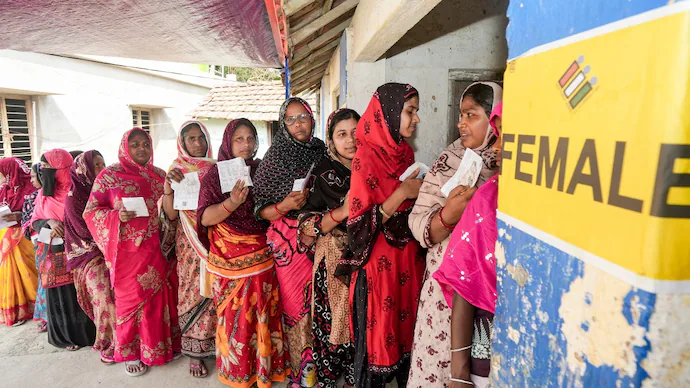
West Bengal witnessed an extraordinary moment in its electoral history as voter turnout in the first phase of the Assembly elections touched a record-breaking 92.9%. This is the highest polling percentage recorded in the state since Independence, surpassing even the intense 2021 elections, which saw around 82% turnout. The massive participation has sparked widespread debate among political analysts, raising one key question what does such a high turnout actually reveal?
One of the most important factors behind this surge is the Election Commission’s Special Intensive Revision (SIR) of electoral rolls. This large-scale exercise removed nearly 91 lakh names from the voter list, including those considered deceased, relocated, or duplicate entries. As a result, the overall electorate reduced significantly from around 7.6 crore voters to about 6.8 crore. With a cleaner and more accurate voter list, the percentage of turnout naturally appears higher.
At the same time, new voters were also added. Around 7 lakh fresh names were included in the electoral rolls, indicating that the voter base was updated rather than simply reduced. This combination of deletion and addition played a key role in shaping the final turnout numbers.
Interestingly, a similar trend was seen in Bihar after a revision of electoral rolls, where turnout increased significantly in subsequent elections. Experts believe that when voter lists become more accurate, participation percentages rise because inactive or invalid entries are removed from the denominator.
However, numbers alone do not tell the full story. Several ground-level factors contributed to the unusually high turnout in West Bengal. One major reason was the fear among voters regarding deletion of names and potential loss of voting rights. Political messaging around citizenship and voter eligibility led many people especially migrant workers to return to their home state to cast their vote.
Cities like Delhi, Mumbai, Bengaluru, and industrial hubs saw a noticeable reverse migration, as people travelled back to West Bengal specifically to vote. This kind of determined participation suggests that voters were highly motivated and did not want to risk being excluded from the democratic process.
Another crucial factor was security. The deployment of approximately 2.4 lakh Central Armed Police Forces (CAPF) personnel ensured a relatively safe and controlled voting environment. In a state where elections have often been associated with tension and clashes, the presence of strong security gave voters more confidence to step out and vote.
District-level data also highlights the intensity of participation. Areas like South Dinajpur and Cooch Behar recorded turnout figures above 95%, while several constituencies in Murshidabad crossed even 96%. Notably, many of these regions were also among those that saw the highest number of voter deletions during the SIR process, reinforcing the idea that fear and awareness played a role in boosting turnout.
When it comes to political advantage, both the ruling Trinamool Congress (TMC) and the Bharatiya Janata Party (BJP) are claiming that the high turnout favors them. Traditionally, high voter turnout is often linked to anti-incumbency, suggesting that voters are eager for change. However, recent electoral trends across India show that higher turnout does not always translate into a loss for the ruling party.
In reality, such a massive turnout reflects increased political awareness, voter enthusiasm, and a strong democratic spirit. It indicates that people are actively engaging with the electoral process, regardless of which party they support.
West Bengal’s record-breaking voter turnout is the result of multiple factors the SIR exercise, voter awareness, fear of exclusion, migration patterns, and improved security. While it clearly demonstrates strong public participation, it does not directly reveal which party holds the advantage. The true impact of this historic turnout will only become clear when the election results are announced.