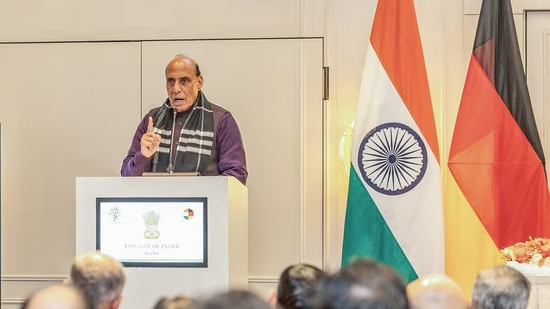
India’s Defence Minister Rajnath Singh delivered a firm and symbolic message regarding national security while addressing members of the Indian community during his official visit to Germany. His remarks came at a significant time, marking one year since the tragic terror attack in Pahalgam, Jammu and Kashmir, which claimed the lives of 26 people, most of them civilians. The attack had deeply impacted the nation and led to a strong military response from India.
While speaking abroad, Rajnath Singh praised the strength and preparedness of the Indian armed forces. Referring to India’s response to past threats, he highlighted a major military operation carried out after the Pahalgam attack, emphasizing that the country is now more capable and better equipped to handle external challenges. He stated that India has always followed a policy of peace and has never initiated aggression against any nation. However, he also made it clear that India will not remain silent if provoked.
In a remark that drew attention, Singh indirectly warned Pakistan without naming it explicitly. He stated that India shares peaceful relations with most of its neighboring countries, but there is one nation that continues to create problems. He hinted that if such actions continue, India knows how to respond, leaving his statement intentionally unfinished but impactful. His use of a cryptic phrase signaled a strong stance without escalating rhetoric openly.
The Defence Minister’s speech also reflected on how India’s military capabilities have evolved over the years. He pointed out that the country has moved away from heavy dependence on defence imports and has started establishing itself as a growing exporter of defence equipment. According to him, this shift represents a major milestone in India’s journey toward self-reliance in defence production. He noted that India has achieved significant export figures in the defence sector, demonstrating its rising position in the global arms market.
During his visit, Rajnath Singh also engaged with international leaders and policymakers, including discussions with German officials on defence and security matters. One of the key topics he addressed was the ongoing situation in West Asia, particularly the tensions surrounding the Strait of Hormuz. This region is one of the most critical maritime routes for global energy supplies, and any disruption there has far-reaching consequences.
Singh emphasized that developments in the Strait of Hormuz are not distant geopolitical events for India but directly impact the country’s economic and energy security. As a developing nation that depends significantly on energy imports, India remains vulnerable to instability in that region. He highlighted the need for maintaining stability and ensuring uninterrupted flow of resources through such vital global trade routes.
The Defence Minister’s visit to Germany reflects India’s broader effort to strengthen international partnerships while asserting its position on global security issues. His speech combined elements of diplomacy, strategic messaging, and national pride. By acknowledging both domestic progress and external challenges, Singh presented India as a responsible yet firm global player.
his statements underline India’s evolving defence posture—one that balances peace with preparedness. While promoting cooperation and stability, the country is also signaling that it will take decisive action when its security is threatened. The message delivered during this visit resonates not only with the Indian diaspora but also with the international community, highlighting India’s growing influence in global defence and geopolitical matters.