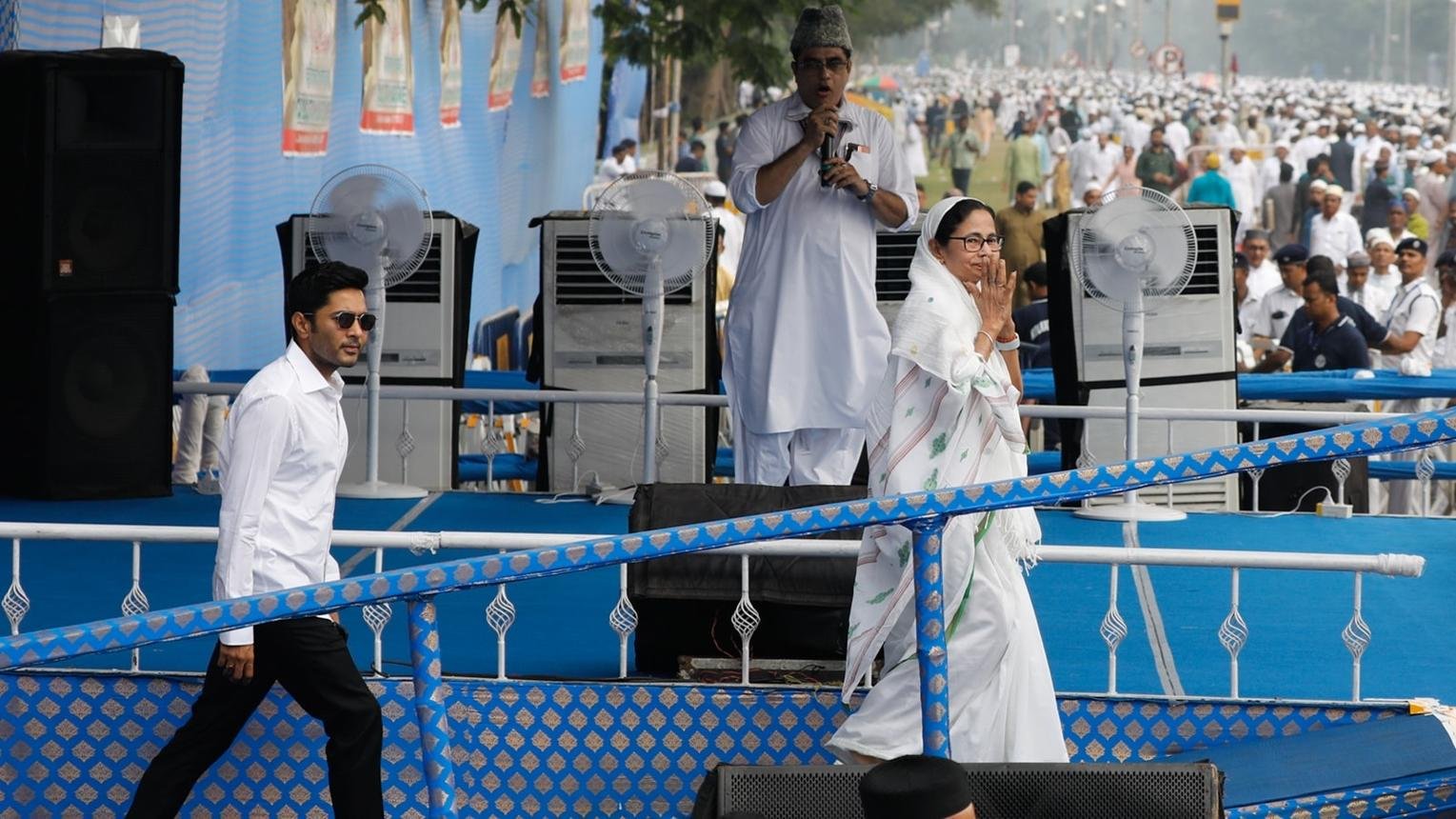
Abhishek Banerjee’s journey in West Bengal politics is a story of transformation—from being seen as a political heir to emerging as a significant force in his own right. While he formally entered politics in 2011, his association with the political world began much earlier, shaped by the influence of his aunt, Mamata Banerjee, a dominant figure in Bengal’s political landscape.
A defining moment from his childhood often recalled in political circles dates back to 1990. Mamata Banerjee had been injured in an attack, and a young Abhishek reportedly showed early signs of political awareness. Over time, this early exposure translated into a deeper understanding of grassroots politics, which would later define his political style.
In 2011, the same year the Trinamool Congress ended the Left Front’s 34-year rule in West Bengal, Abhishek Banerjee officially stepped into politics. At just 23, he was appointed the national president of the All India Trinamool Youth Congress. His rise within the party was rapid, and he brought with him a more structured, modern approach to political organisation, focusing on strengthening booth-level networks and professionalising party operations.
His entry into electoral politics came in 2014 when he contested and won the Lok Sabha elections from Diamond Harbour, becoming one of the youngest Members of Parliament at the age of 26. Over the years, his electoral performance has reflected his growing influence. From a modest victory margin in 2014, he significantly expanded his lead in subsequent elections, culminating in a massive win in 2024, where he secured a record margin.
By 2021, his role within the Trinamool Congress had become more prominent when he was appointed the party’s General Secretary. This position placed him at the centre of the party’s strategic planning and national outreach. Though Mamata Banerjee continues to be the undisputed leader, Abhishek has gradually established himself as a key decision-maker and the face of the party’s younger leadership.
Despite his rise, Abhishek Banerjee has faced criticism and challenges. Allegations of dynastic politics have frequently been directed at him, with opponents questioning his rapid ascent. Additionally, he has been under scrutiny in connection with various corruption cases, including recruitment and coal-related scams, and has been questioned by investigative agencies. However, he has consistently denied wrongdoing and continued to remain politically active.
The 2026 West Bengal elections represent a crucial moment in his career. More than just another electoral contest, it is seen as a test of his leadership and influence within the party. Observers note that this election is an opportunity for him to prove his political strength independently, beyond his association with Mamata Banerjee.
In recent years, Abhishek has adopted a data-driven and youth-focused campaign strategy. His emphasis on digital outreach, efficient welfare delivery, and targeted voter engagement reflects a shift towards modern political campaigning. While Mamata Banerjee continues to focus on governance and key political battles, Abhishek has taken on the role of expanding the party’s reach, especially in rural and semi-urban areas.
The coordination between the two leaders appears to have strengthened the party’s overall strategy. While Mamata anchors the party’s traditional support base, Abhishek works to attract younger voters and strengthen organisational efficiency.
As the political landscape in West Bengal evolves, Abhishek Banerjee stands at a defining crossroads. The 2026 elections could shape not only his future but also the trajectory of the Trinamool Congress. Whether he fully steps out of his aunt’s shadow to become the central face of Bengal politics remains to be seen, but his growing influence is undeniable.