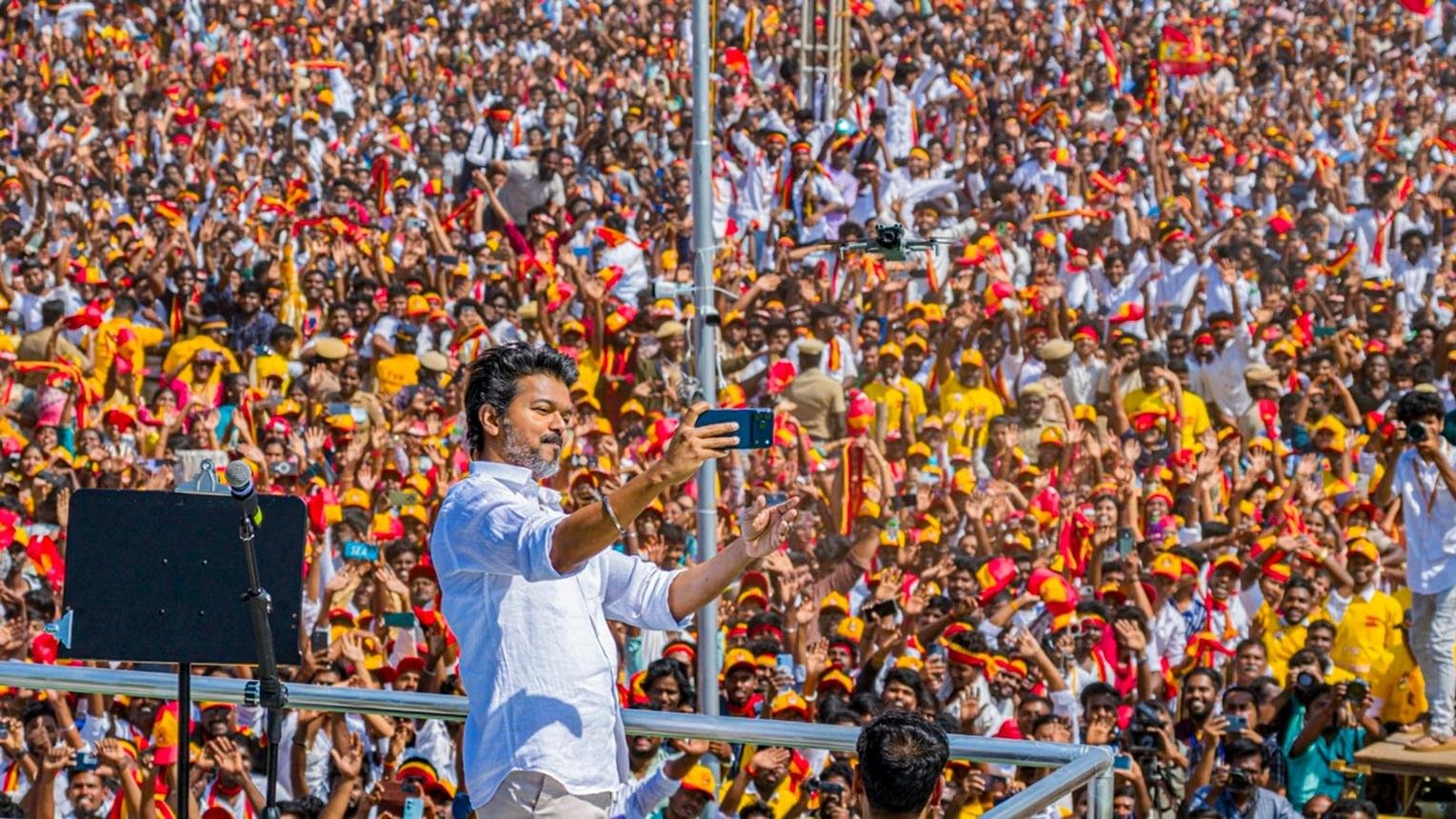
The massive victory of actor-turned-politician Vijay and his party, Tamilaga Vettri Kazhagam (TVK), in Tamil Nadu has become one of the biggest political talking points in the country. While many observers describe it as a simple anti-incumbency wave or another example of Tamil cinema influencing politics, political analysts believe the reality is far more complex. Vijay’s rise reflects a major shift in the aspirations and mindset of Tamil Nadu’s younger generation.
Tamil Nadu has experienced rapid economic and technological growth over the last three decades. Cities like Chennai and Coimbatore became major hubs for IT companies, software services, startups, and business outsourcing industries. As a result, a large section of the state’s youth grew up in a digitally connected environment with access to higher education, global opportunities, and social media influence. This new generation is no longer satisfied with just welfare schemes and basic necessities. They want larger opportunities, ambitious leadership, and a political system that matches their aspirations.
Analysts say Vijay successfully connected with this emotional shift among young voters. The phrase “Yeh Dil Maange More” perfectly captures the mood of Tamil Nadu’s Gen Z electorate. Even though the DMK government under MK Stalin introduced several welfare measures in education, startups, farming, and skill development, many young voters felt they wanted something beyond traditional politics. Welfare programs were appreciated, but they were not enough to inspire a generation raised in the age of Instagram, AI careers, and global ambitions.
Social media also played a major role in Vijay’s political success. Tamil Nadu has one of the highest smartphone penetration rates in India, and millions of young voters actively consume political content online. Political observers note that elections earlier revolved around WhatsApp campaigns, but now platforms like Instagram and short-form video content dominate youth engagement. Vijay’s charisma, cinematic dialogue delivery, energetic speeches, and emotional connection with fans gave him a massive advantage among first-time voters and younger audiences.
Another important factor behind Vijay’s popularity is his ability to balance old Dravidian ideals with modern aspirations. When Vijay launched his political journey, he paid tribute to Periyar E.V. Ramasamy, signaling respect for the rationalist roots of Tamil Nadu politics. However, his party also represents a break from the older political structure dominated by family control, corruption allegations, and entrenched political dynasties. Young voters increasingly feel disconnected from traditional political families and are looking for leaders who appear relatable, ambitious, and future-oriented.
The election results also revealed how much Tamil Nadu society has evolved. Earlier generations focused on survival, employment, and social security. Today’s generation is thinking beyond basic needs. They are inspired by global success stories like Sundar Pichai and dream of leadership roles, innovation, and international recognition. Many political analysts believe Vijay symbolized that ambition and hope for upward mobility.
However, the biggest challenge for TVK starts now. Winning an election through emotion, charisma, and youthful energy is one thing, but meeting the expectations of an ambitious generation is another. Tamil Nadu’s voters have clearly raised the bar, and Vijay’s government will now be tested on governance, development, transparency, and long-term vision. Tamil Nadu politics has entered a new era, and the rise of Vijay marks more than just a celebrity entering politics. It represents the arrival of aspiration-driven politics powered by a new generation of voters.