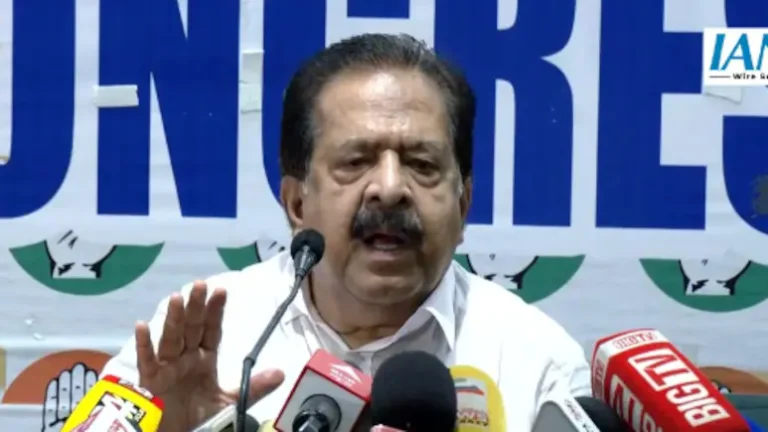
The Congress party’s decision to appoint V. D. Satheesan as the next Chief Minister of Kerala instead of senior leader K. C. Venugopal has sparked major political discussions across the country. Although Venugopal was widely considered the frontrunner for the post, the party ultimately selected Satheesan after days of internal deliberations and consultations with alliance partners.
The Congress-led United Democratic Front (UDF) secured a massive victory in the Kerala Assembly elections by winning 102 out of 140 seats. Following the landslide win, attention quickly shifted toward the race for the chief minister’s position. KC Venugopal appeared to have several advantages. He had played a key role in the election campaign, enjoyed strong support from senior Congress leaders, and reportedly had the backing of a majority of Congress MLAs. His close association with Rahul Gandhi also made him one of the strongest contenders for the top post.
However, as the announcement was delayed for several days, it became increasingly clear that the final decision was not straightforward. Behind the scenes, alliance politics and public perception played a major role in shaping the outcome. VD Satheesan, who served as the Leader of the Opposition in the previous Assembly, emerged as the “people’s candidate” within the party and among coalition partners.
Satheesan is a six-time MLA from the Paravur constituency in Ernakulam district and is known for his strong grassroots image. He has maintained a solid political presence in the state for over two decades and is credited with strengthening the Congress party at the local level. His supporters argued that he connected better with the public and had a stronger understanding of Kerala’s political landscape.
One of the biggest factors behind Satheesan’s selection was the support he received from Congress allies, especially the Indian Union Muslim League (IUML). Reports suggested that the IUML, Kerala Congress, and Revolutionary Socialist Party collectively backed Satheesan. These alliance partners hold significant influence within the ruling coalition, and their support was considered crucial for maintaining political stability.
Political analysts believe the Congress leadership did not want to risk friction within the alliance by overlooking Satheesan. The IUML, in particular, has a strong grassroots network and has played an important role in several electoral victories for the Congress in Kerala, including Rahul Gandhi’s victories from Wayanad. Losing the confidence of such allies could have weakened the new government before it even began functioning.
Another reason that reportedly worked against Venugopal was his position as a Lok Sabha MP. Had he become Chief Minister, he would have needed to resign from Parliament and contest a by-election within six months. Such by-elections always carry political risk, and the Congress leadership may have preferred to avoid unnecessary uncertainty.
After being selected, Satheesan thanked the party leadership and praised both Venugopal and other senior Congress leaders. He emphasized unity within the party and promised to work collectively for the development of Kerala. Venugopal also accepted the party’s decision gracefully and assured full support to the new government.
The Congress leadership believes Satheesan’s appointment will help maintain unity within the alliance while strengthening the party’s position in South India, where it continues to remain politically significant. With high public expectations and a strong electoral mandate, all eyes are now on how Satheesan leads Kerala in the coming years.