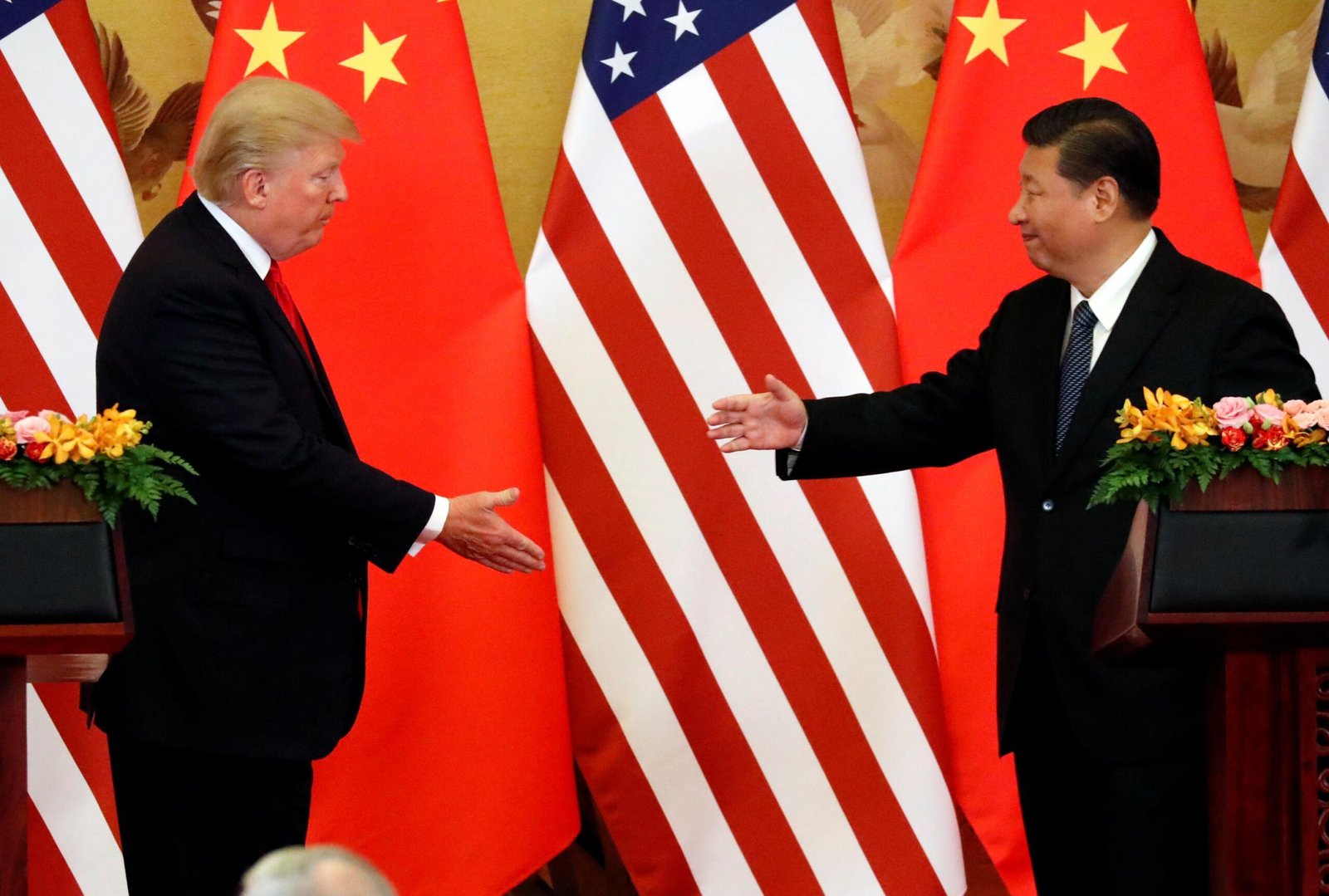
Former US President Donald Trump announced that his latest summit with Chinese President Xi Jinping resulted in several major trade agreements that he described as beneficial for both nations. The high-level meeting took place in Beijing and focused on strengthening economic ties while also addressing rising geopolitical tensions across the globe.
Trump said the discussions produced “fantastic trade deals” and claimed that several long-standing issues between the two global powers had been resolved during the talks. The summit included meetings at Zhongnanhai, the Chinese leadership compound near the Forbidden City, where both leaders held private discussions and ceremonial events.
According to Trump, the agreements covered multiple sectors including aviation, agriculture, energy, and artificial intelligence. One of the biggest announcements involved China reportedly agreeing to purchase around 200 Boeing aircraft from the United States. The deal is expected to provide a major boost to the American aviation sector and improve trade relations between the two countries.
Trump also stated that China showed interest in increasing imports of American oil and soybeans. Over the past few years, China had reduced soybean purchases from the US and shifted more imports toward Brazil due to trade tensions and tariff disputes. Renewed agricultural cooperation could help American farmers and exporters recover lost business opportunities.
Another major topic discussed during the summit was the ongoing conflict involving Iran and the strategic Strait of Hormuz. Trump revealed that Xi Jinping assured him China would not provide military support to Tehran. He also claimed Xi expressed willingness to help reopen shipping routes through the Strait of Hormuz, which remains one of the world’s most important oil transportation corridors.
China’s foreign ministry later issued a statement calling for a lasting ceasefire in the Middle East and emphasized the need to reopen international shipping lanes as quickly as possible. While the Chinese government did not directly confirm Trump’s statements, it stressed the importance of maintaining global stability and uninterrupted trade routes.
Artificial intelligence was another key subject during the talks. US Treasury Secretary Scott Bessent said both countries are considering establishing “guardrails” for the responsible use of AI technology. The discussions reportedly aimed to reduce risks associated with rapidly growing AI systems while maintaining healthy competition between the world’s two largest economies.
Despite the positive atmosphere, tensions over Taiwan continued to remain sensitive. Chinese state media reported that Xi warned the United States against taking steps that could increase tensions surrounding Taiwan. Beijing considers Taiwan part of China, while the US maintains unofficial support for the island’s democratic government.
US Secretary of State Marco Rubio later clarified that Washington’s policy toward Taiwan had not changed following the summit. Taiwan’s government also thanked the US for continuing to support regional stability.
The Trump-Xi summit highlighted both cooperation and competition between the two superpowers. While economic agreements brought optimism for stronger trade ties, major geopolitical challenges such as Taiwan, AI regulation, and Middle East conflicts continue to shape the future relationship between Washington and Beijing.