
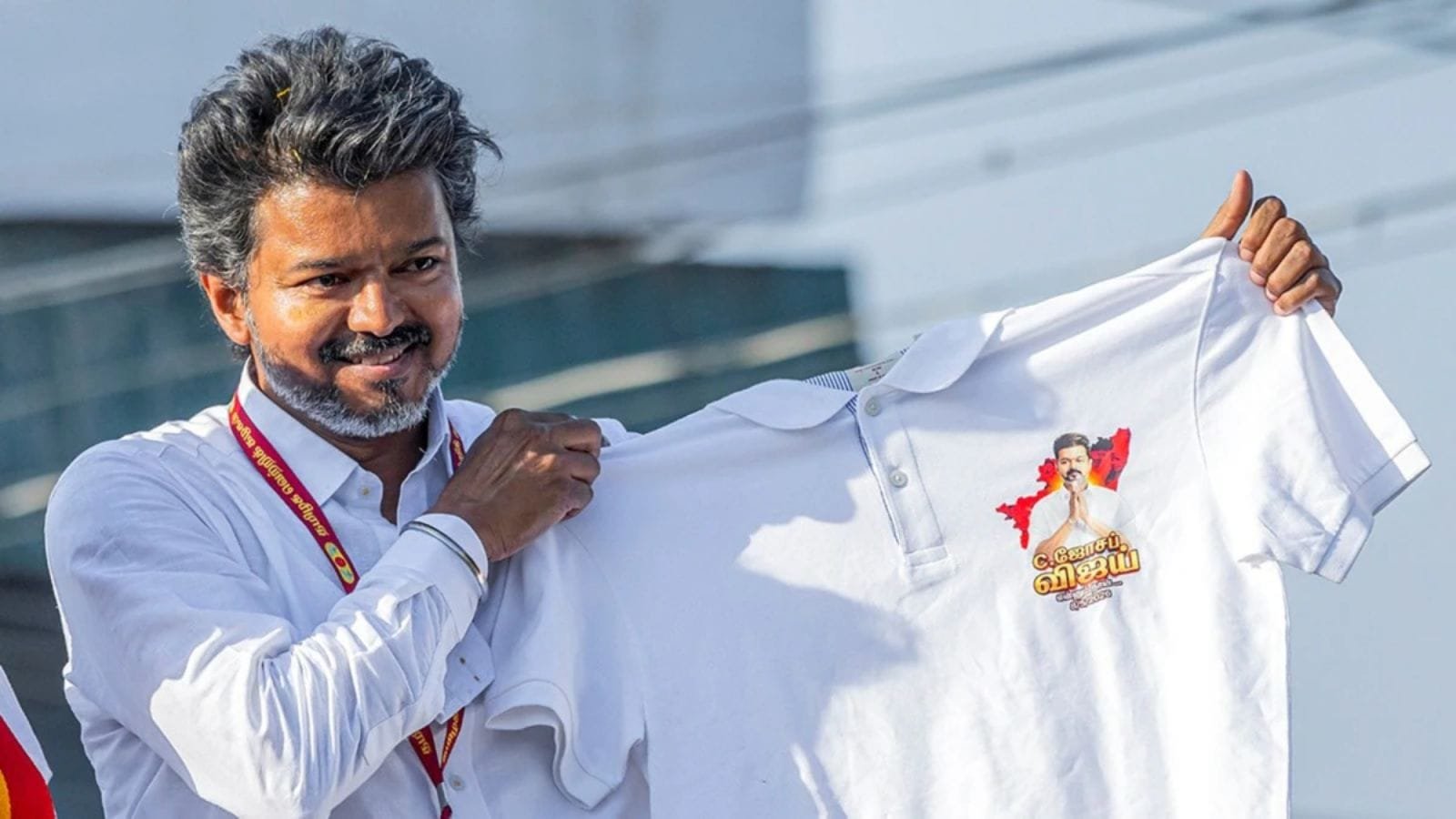
Tamil Nadu’s political landscape is witnessing a dramatic shift as the ruling Tamilaga Vettri Kazhagam (TVK), led by actor-turned-politician Vijay, appears determined to strengthen its position in the Assembly and move towards securing an independent majority. What initially seemed like efforts to manage coalition partners has now evolved into a broader strategy aimed at reducing dependence on allies and transforming TVK into a dominant political force in the state.
The latest developments began when three AIADMK legislators S. Jayakumar, K. Maragatham Kumaravel, and P. Sathyabama resigned from their Assembly memberships before formally joining the ruling TVK. Their move has sparked intense political speculation, with observers suggesting that these leaders could seek re-election under TVK’s banner in upcoming by-elections. The resignations have intensified discussions about what political insiders have nicknamed “Operation L,” a campaign allegedly designed to weaken the opposition AIADMK while strengthening TVK’s numerical strength in the Assembly.
Currently, TVK holds an effective strength of 107 legislators in the 234-member Assembly. While the party continues to enjoy support from coalition allies, including Congress, CPI, CPI(M), VCK, and IUML, senior leaders reportedly believe that long-term political stability requires the party to achieve the crucial majority mark of 118 seats on its own. Party strategists view upcoming by-elections as an opportunity to gradually increase TVK’s strength and reduce reliance on coalition arithmetic.
Sources within political circles indicate that more AIADMK legislators could follow the path taken by the recent defectors. Reports suggest that seven to eight additional MLAs may be considering resignation in the coming weeks. This possibility has created uncertainty within AIADMK ranks and raised concerns about the party’s future organizational stability. What makes the situation particularly striking is that some of these legislators were reportedly involved in earlier discussions regarding possible cooperation with the ruling party before those negotiations unexpectedly collapsed.
Within TVK itself, opinions reportedly differed on how to handle AIADMK rebels. Some leaders feared that directly inducting opposition legislators into government positions could damage the party’s clean-image narrative and trigger accusations of political opportunism. Others argued that accommodating experienced legislators would strengthen governance and improve legislative stability. Eventually, TVK appears to have adopted a middle path by keeping Cabinet positions unchanged while allowing individual leaders to join the party independently.
Political observers have also noted that TVK’s outreach efforts seem focused on legislators who face political vulnerability within their own party structures. Several leaders from socially and politically marginalized groups are reportedly among those being approached. Analysts believe this reflects a broader social and electoral calculation aimed at expanding TVK’s support base across multiple communities ahead of future elections.
Meanwhile, AIADMK is struggling to contain the growing crisis. While some legislators are leaving, others are reportedly working toward reconciliation with party leadership under Edappadi K. Palaniswami (EPS). Senior leaders hope that party unity and anti-defection laws will help prevent further erosion of support. However, TVK’s strategy of encouraging resignations before potential re-elections may allow defectors to avoid legal complications associated with direct defections.
The unfolding political battle highlights a significant transformation in Tamil Nadu politics. For decades, the state’s major Dravidian parties relied on carefully managed alliances while maintaining centralized control. Vijay’s growing influence and TVK’s aggressive expansion strategy have disrupted that formula. As the ruling party pushes toward an independent majority, AIADMK faces one of its most challenging periods in recent history. Whether “Operation L” succeeds or not, the developments are reshaping political equations across Tamil Nadu, constituency by constituency and legislator by legislator.