
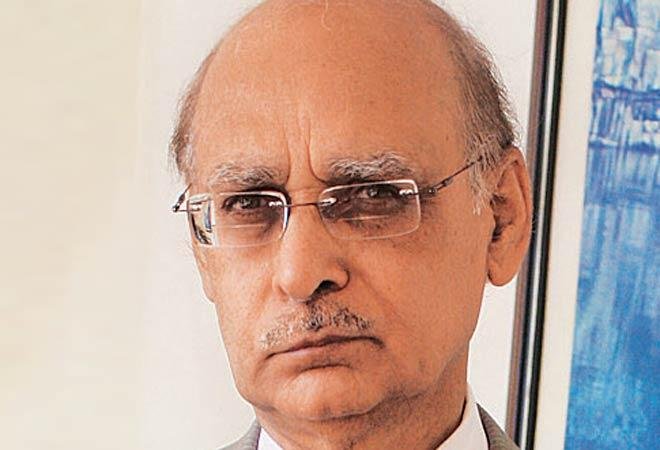
Retired Supreme Court judge Justice Prakash Prabhakar Naolekar has once again entered the national spotlight after being appointed to head the newly formed High-Level Committee on Demographic Change. The committee, announced by Union Home Minister Amit Shah, has been tasked with studying demographic shifts across India, particularly those linked to illegal immigration and what the government describes as “unnatural demographic changes.”
The committee is expected to conduct a detailed assessment of changing population patterns among various religious and social groups and recommend long-term policy solutions. Along with Justice Naolekar, the panel includes former bureaucrats, security experts, and economists, while the Ministry of Home Affairs will coordinate its functioning.
Justice Naolekar’s appointment has attracted attention not only because of the importance of the committee but also due to his long and often controversial public career. A third-generation lawyer from Madhya Pradesh, he began practicing law in the 1960s and trained under prominent legal figures such as Justice A.P. Sen and Justice J.S. Verma, both of whom later became Supreme Court judges. His legal journey eventually led him to become a judge of the Madhya Pradesh High Court, followed by positions in the Rajasthan and Gauhati High Courts before his elevation to the Supreme Court in 2002.
During his tenure in the apex court, Justice Naolekar was part of several important judgments. One of the most notable was the 2005 Parliament attack case verdict involving Afzal Guru. The bench upheld Guru’s death sentence while modifying the punishment awarded to another accused and acquitting two others.
Apart from high-profile criminal cases, Justice Naolekar is also remembered for his indirect role in the legal battle against Section 377 of the Indian Penal Code. At a time when the Delhi High Court had initially refused to hear a petition challenging the colonial-era law criminalizing homosexuality, a Supreme Court bench that included Justice Naolekar directed the High Court to reconsider the matter. That decision eventually paved the way for the landmark 2009 Delhi High Court judgment decriminalizing consensual same-sex relationships.
However, Justice Naolekar’s career has not been without controversy. After retiring from the Supreme Court in 2008, he was appointed Lokayukta of Madhya Pradesh in 2009. During his tenure, opposition leaders, especially from the Congress party, accused him of being close to the BJP leadership. The criticism intensified during investigations related to the so-called “dumper scam,” in which then Chief Minister Shivraj Singh Chouhan and his family faced allegations involving mining lease irregularities and disproportionate assets.
Justice Naolekar’s office later gave a clean chit in the matter, leading Congress leaders to openly question the impartiality of the Lokayukta institution. Critics even referred to him as a “BJP man,” while also raising questions about official delegations involving his family members. Despite the allegations, no direct wrongdoing against him was legally established.
His tenure as Lokayukta was eventually extended beyond the standard term after amendments to the state law allowed the officeholder to continue until a successor was appointed. He finally stepped down in 2016 after serving nearly seven years in the post.
The latest appointment places Justice Naolekar at the center of another politically sensitive issue. The government has argued that demographic change linked to illegal immigration poses long-term national challenges, while opposition parties are likely to closely scrutinize the functioning and conclusions of the committee.
As debates over migration, population patterns, and national identity continue to shape Indian politics, Justice Naolekar’s role as the head of the panel is expected to remain under public and political focus in the months ahead.