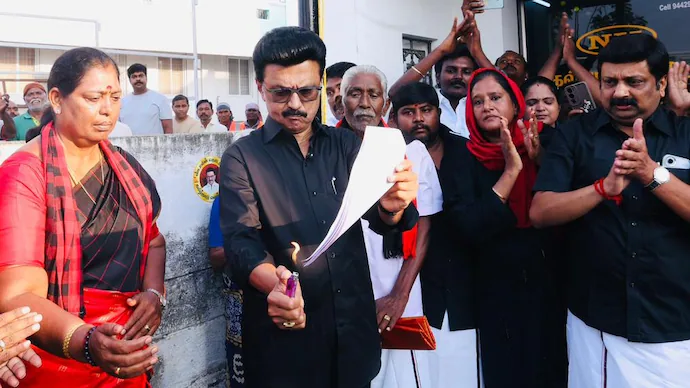
Tamil Nadu Chief Minister M. K. Stalin has intensified his opposition to the Centre’s proposed delimitation exercise by launching a statewide protest. In a symbolic act of resistance, he burned a copy of the proposed bill and hoisted a black flag, marking the beginning of a broader agitation across the state.
The protest comes at a time when Parliament has convened a special three-day session to discuss key legislative reforms, including changes to India’s electoral structure. The proposed legislation aims to redraw constituency boundaries and increase the number of seats in the Lok Sabha and state assemblies. However, it has sparked widespread concern among several opposition parties.
Stalin, dressed in black as a mark of protest, described the proposed delimitation as a threat to federal principles and the rights of southern states. He argued that basing seat allocation on population could disadvantage states like Tamil Nadu, which have successfully implemented population control measures. According to him, the move could reduce the political influence of such states at the national level.
Taking to social media, Stalin called for mass participation in the protest and urged citizens across Tamil Nadu to display black flags at their homes. He compared the current situation to past movements in the state, suggesting that collective resistance could force a reconsideration of the policy.
The protest quickly gained momentum, with black flags appearing in several parts of the state. Senior leaders from the ruling party also joined the agitation, raising concerns about the lack of consultation with states before introducing such a significant reform.
Critics of the delimitation plan have also questioned the timing of the move, especially as several regions are engaged in election-related activities. They argue that such major decisions require broader consensus and transparency.
The Centre, however, maintains that the proposal is aimed at ensuring fair representation and implementing the women’s reservation policy effectively. Plans to expand the Lok Sabha and introduce reserved seats for women are part of a larger effort to reform the electoral system ahead of the 2029 general elections.
As the debate intensifies, the issue of delimitation is emerging as a major political flashpoint, with strong reactions from both the government and opposition. The coming days are likely to witness further developments as discussions continue in Parliament.