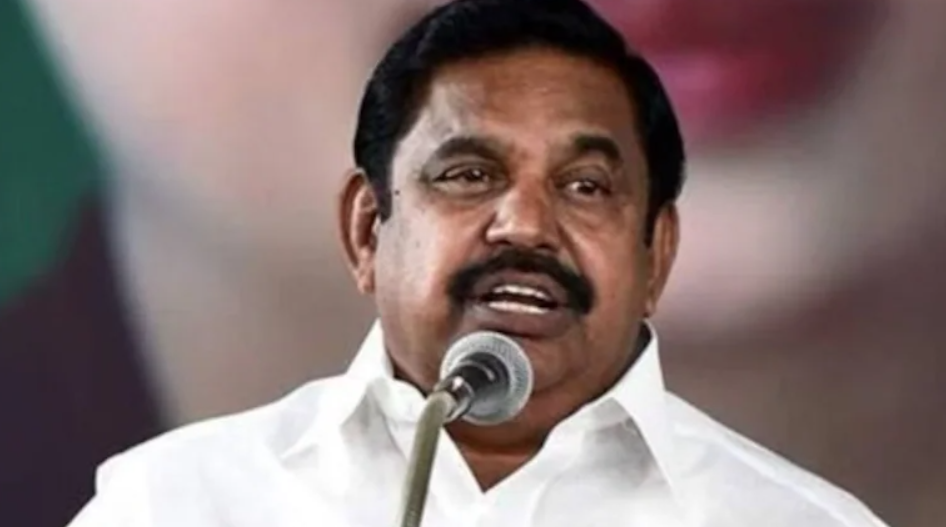
The journey of the AIADMK after the passing of former Chief Minister J. Jayalalithaa has been marked by internal power struggles, shifting political alliances, and growing questions about the party’s future. Once led by two of Tamil Nadu’s most influential political figures—M. G. Ramachandran (MGR) and Jayalalithaa—the party built its strength on charismatic leadership and a loyal grassroots network. Critics now argue that under the leadership of Edappadi K. Palaniswami (EPS), much of that legacy has been transformed, leading to electoral setbacks and internal divisions.
Following Jayalalithaa’s death in 2016, AIADMK faced a leadership vacuum. While O. Panneerselvam (OPS) was widely regarded as Jayalalithaa’s most trusted lieutenant, Tamil Nadu politics took an unexpected turn when Jayalalithaa’s close aide V. K. Sasikala selected EPS to become Chief Minister. Many believed he would remain under Sasikala’s influence, but EPS gradually consolidated power, eventually sidelining OPS, Sasikala, and later T. T. V. Dhinakaran.
Political observers say this consolidation of authority altered the social balance that had long benefited AIADMK. For decades, leaders such as OPS, Sasikala, and Dhinakaran represented influential support bases in southern Tamil Nadu. As EPS strengthened his position, the party’s power structure increasingly shifted toward western Tamil Nadu, where his own political influence was strongest. Critics argue this created dissatisfaction among traditional supporters and weakened the party’s broader coalition.
Another major criticism concerns AIADMK’s alliance strategy. Under Jayalalithaa, the party maintained an independent identity and often kept national parties at arm’s length. EPS, however, repeatedly aligned with the BJP during several key elections. Opponents within the party claim that this decision contributed to a gradual erosion of minority support and alienated some traditional Dravidian voters who viewed AIADMK as becoming increasingly dependent on a national political partner.
Questions have also been raised about EPS’s handling of emerging political opportunities. Critics point to the failure to establish an alliance with actor-turned-politician Vijay and his party, Tamilaga Vettri Kazhagam (TVK). Political analysts suggest that such a partnership could have significantly strengthened AIADMK’s electoral prospects. Instead, the party continued on its existing path and later faced further electoral challenges.
Perhaps the most serious concern raised by critics relates to the internal structure of the party itself. MGR originally envisioned AIADMK as a cadre-driven movement where grassroots workers could rise through the ranks. Opponents argue that changes made to party rules under EPS made leadership contests more difficult, concentrating authority around a smaller circle of leaders. They claim this reduced internal democracy and discouraged alternative voices within the organisation.
Recent events have further intensified these concerns. A significant number of AIADMK legislators reportedly challenged the party leadership during a trust vote, exposing visible cracks within the organisation. Rebel leaders have demanded greater accountability and called for discussions on the party’s future direction after a series of electoral defeats.
Despite the criticism, EPS continues to defend his leadership, arguing that he preserved the party’s vote share during difficult political circumstances. However, the debate within AIADMK has now moved beyond individual leadership. Many party workers and supporters are asking whether the movement built by MGR and strengthened by Jayalalithaa can regain its former influence or whether it needs a major course correction to reconnect with its traditional support base.