
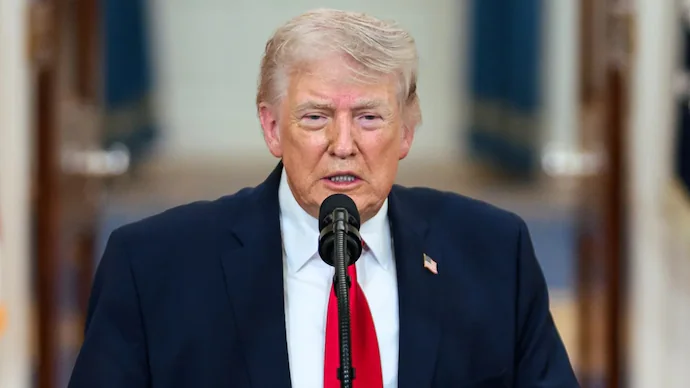
US President Donald Trump has indicated that the United States is not rushing toward a new agreement with Iran, despite recent reports suggesting that both sides were close to reaching a breakthrough. In a statement shared on social media, Trump said he had instructed American negotiators to proceed carefully and avoid hurrying into any arrangement, emphasizing that both nations need sufficient time to ensure any agreement is effective and sustainable.
The latest round of discussions between Washington and Tehran has generated considerable international attention. Earlier comments from Trump had fueled speculation that a deal was nearly complete, with reports suggesting that a framework agreement could be announced soon. However, the US president has now clarified that while discussions remain constructive, negotiators should focus on getting the details right rather than seeking a quick resolution.
According to reports, the proposal currently under discussion involves extending a ceasefire for 60 days, reopening the strategically important Strait of Hormuz, and creating a pathway for further negotiations regarding Iran’s nuclear program. The Strait of Hormuz is one of the world’s most critical maritime routes, handling a significant portion of global oil and liquefied natural gas shipments. Any disruption to traffic through the waterway can have major consequences for global energy markets.
US Secretary of State Marco Rubio recently stated that meaningful progress had been made in talks with Iran. He suggested that there was a strong possibility of restoring unrestricted navigation through the Strait of Hormuz while launching a focused, time-bound negotiation process on nuclear-related issues. Rubio noted that although substantial progress has been achieved, the discussions have not yet resulted in a final agreement.
Iranian officials have also acknowledged progress while remaining cautious. Foreign Ministry spokesperson Esmail Baghaei said the two sides appear both “close and far” from an agreement, highlighting the complexity of the negotiations. Iranian President Masoud Pezeshkian reiterated that Iran’s nuclear program is intended solely for peaceful purposes and expressed a willingness to reassure the international community that Tehran is not pursuing nuclear weapons.
Despite the diplomatic momentum, several sensitive issues remain unresolved. These include the future of US sanctions on Iran, the release of Iranian funds frozen abroad, and the extent to which Tehran would be expected to limit its nuclear activities. Reports suggest that discussions may also include arrangements concerning Iran’s stockpile of highly enriched uranium, a matter that has long been a source of concern for Western governments.
The proposed framework has sparked debate within the United States. Some Republican lawmakers argue that the deal could be too accommodating toward Iran and risk undermining previous military and economic pressure efforts. Others believe the negotiations have successfully brought Iran back to the negotiating table and created an opportunity for a more stable regional environment.
For now, both Washington and Tehran appear committed to continuing talks. While optimism remains, leaders on both sides acknowledge that significant work is still required before any comprehensive agreement can be finalized. Trump’s latest comments suggest that patience, rather than speed, will guide the next phase of negotiations.