West Bengal politics has entered a dramatic and uncertain phase after Chief Minister Mamata Banerjee refused to resign despite her party’s defeat in the 2026 Assembly elections. The Bharatiya Janata Party (BJP) secured a massive victory in the state, winning 207 seats in the 294-member Assembly, while Mamata Banerjee’s Trinamool Congress (TMC) suffered a major setback.
However, Mamata Banerjee has strongly rejected the election outcome, claiming the mandate was manipulated through unfair practices and alleging collusion between the Election Commission and the BJP. Her refusal to step down has now triggered what political experts are calling an unprecedented constitutional crisis in West Bengal.
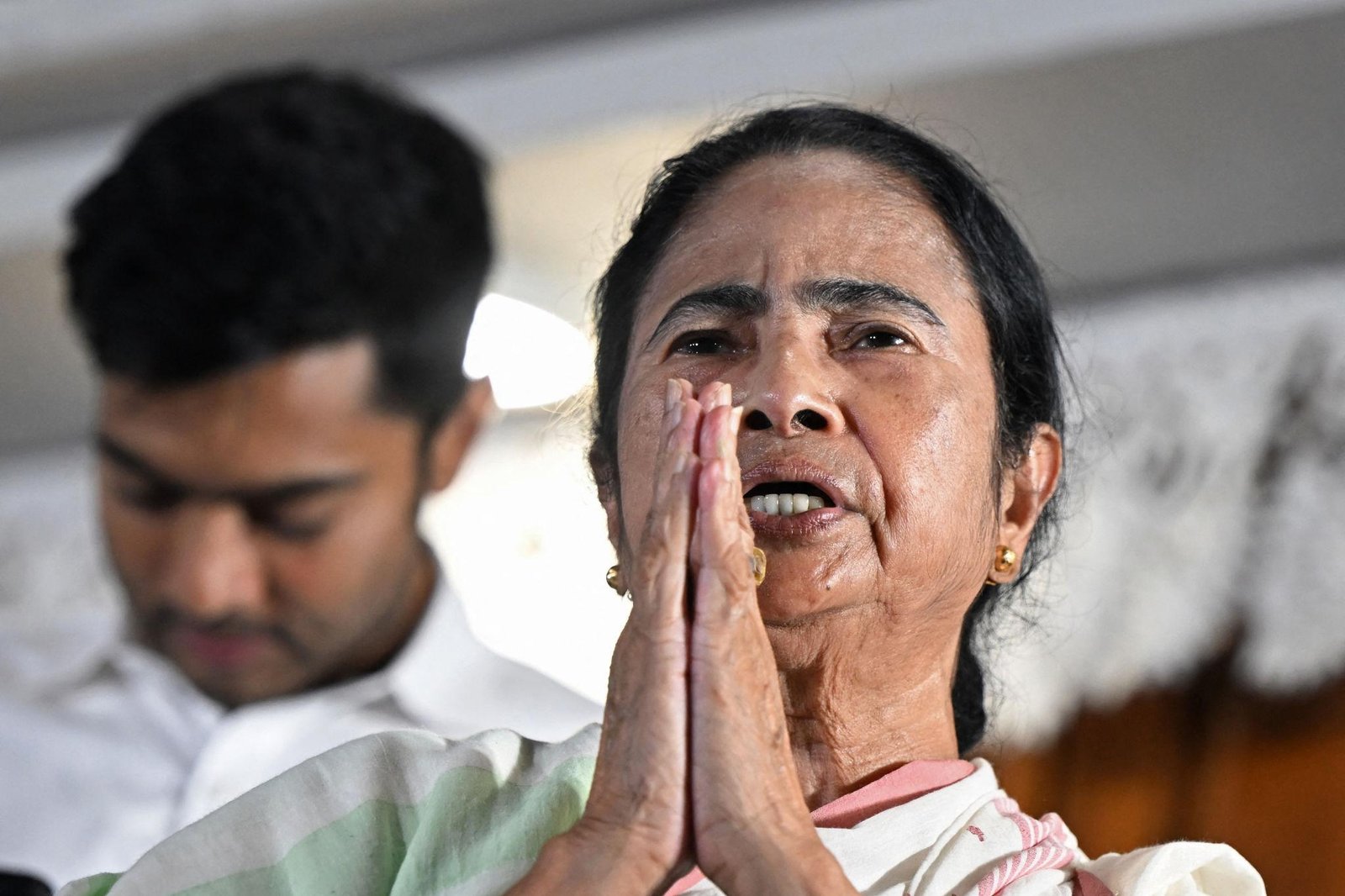
Speaking to the media after the results, Mamata Banerjee insisted that she had not truly lost the election. According to her, the results were influenced by illegal activities, manipulated voter lists, and biased conduct by election authorities. She declared that she would not visit Raj Bhavan to submit her resignation as Chief Minister.
“I have not lost, so I will not resign,” she said firmly, maintaining her combative political stance that has defined her career for over a decade.
The situation has now shifted attention toward Governor R. N. Ravi and the constitutional process that follows when a sitting chief minister refuses to step down after losing majority support in the Assembly.
Legal experts point out that the Indian Constitution does not specifically mention that a chief minister must resign immediately after an election defeat. Traditionally, leaders resign once it becomes clear they no longer command the confidence of the legislative assembly. This practice is based more on democratic convention than on a written constitutional rule.
Under Article 164(1) of the Constitution, the chief minister and council of ministers hold office “during the pleasure of the governor.” This gives the governor the authority to seek proof of majority support on the Assembly floor. If Mamata Banerjee fails to demonstrate majority backing, the governor could dismiss the government and invite the BJP, as the largest party, to form the next administration.
Political analysts believe the governor’s first step will likely be asking Mamata Banerjee to prove her majority in the Assembly. Since the TMC reportedly won only 80 seats, well below the majority mark, it may become difficult for her to continue in office unless she can prove support from other legislators.
Mamata Banerjee has also accused the Election Commission of manipulating around 100 constituencies. She alleged that voter list revisions, delayed counting processes, and administrative interference played a role in the BJP’s landslide victory. On Monday evening, she criticized the poll body for allegedly playing “nasty games” and claimed similar tactics were seen in recent elections in Maharashtra, Haryana, and Bihar.
The TMC chief also made serious allegations regarding violence during vote counting. She claimed she was physically assaulted at a counting center and accused officials of switching off CCTV cameras during the incident. However, no official confirmation regarding those claims has been released so far.
The timing of the crisis has added to the urgency. The term of the current Bengal Assembly is set to end on May 7, leaving very little time for a political resolution. If the deadlock continues, constitutional authorities, including the Governor and possibly even the Supreme Court, may have to intervene.
As political tensions rise, the coming days are expected to be crucial for West Bengal’s future. Whether Mamata Banerjee can sustain her challenge or whether the BJP will officially take control of the state government remains the biggest political question in the country right now.