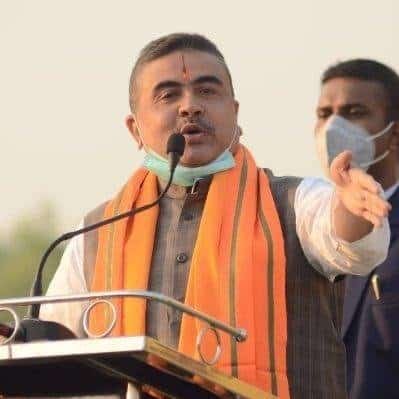
Controversial Bengal politician Suvendu Adhikari addresses supporters amid political tensions.
Senior BJP leader Suvendu Adhikari has come under intense criticism after multiple reports highlighted a pattern of controversial speeches and statements allegedly targeting Muslims during political campaigns in West Bengal. The issue has triggered a major political debate across the country, especially after Adhikari emerged as one of the BJP’s most influential faces in Bengal politics.
According to reports examining his speeches and public statements between 2021 and 2026, Adhikari repeatedly used strong religious and political rhetoric while campaigning across the state. Critics claim that many of his speeches focused on creating religious polarization and deepening divisions between communities during elections.
One of the most discussed incidents reportedly took place in Nandigram during the election campaign, where Adhikari allegedly referred to Muslim migrant workers while addressing voters and warned people against making “mistakes” during voting. Opposition parties accused him of using fear-based political messaging to influence voters.
Over the last few years, Adhikari became a central figure in the BJP’s aggressive campaign strategy in West Bengal. His rise inside the party became even more significant after he left the Trinamool Congress (TMC) and joined the BJP in 2020. Since then, he has played a major role in strengthening the BJP’s support base in several districts across the state.
However, many civil rights groups and opposition leaders have raised concerns over the tone of his public speeches. Reports claim that Adhikari often used controversial terms and made statements that critics described as divisive and inflammatory. Some speeches allegedly included calls for social separation, criticism of Muslim-majority areas, and references to international conflicts while discussing local politics.
Political observers believe this style of campaigning helped the BJP increase its influence in districts where communal tensions had already become politically sensitive issues. Analysts also point out that the BJP’s electoral growth in several regions of Bengal coincided with increasing political polarization.
The controversy intensified further after Adhikari allegedly praised individuals accused of attacking Muslim street vendors during an event in Kolkata. His comments defending the accused triggered strong backlash from opposition parties and activists, who demanded stricter action against hate speech and communal politics.
Adhikari has also faced criticism for remarks related to healthcare camps, tourism in Muslim-majority areas, and slogans promoting Hindu unity. Opposition leaders accused him of attempting to divide communities for political gains, while BJP supporters argued that he was speaking about cultural identity and security concerns.
Despite repeated criticism, Adhikari remains a powerful political leader in Bengal and continues to attract strong support from BJP workers and sections of voters. His supporters claim that he openly speaks about issues ignored by other parties and represents strong opposition politics in the state.
West Bengal has historically been known for relatively stable communal harmony compared to several other Indian states. However, political analysts say that recent years have seen an increase in religious polarization during election campaigns. Many experts believe that the future political atmosphere in Bengal will largely depend on how major parties handle sensitive community issues in the coming years.
The controversy surrounding Adhikari’s speeches has once again sparked a national discussion about political rhetoric, communal harmony, and the role of leaders in maintaining social unity during election campaigns.