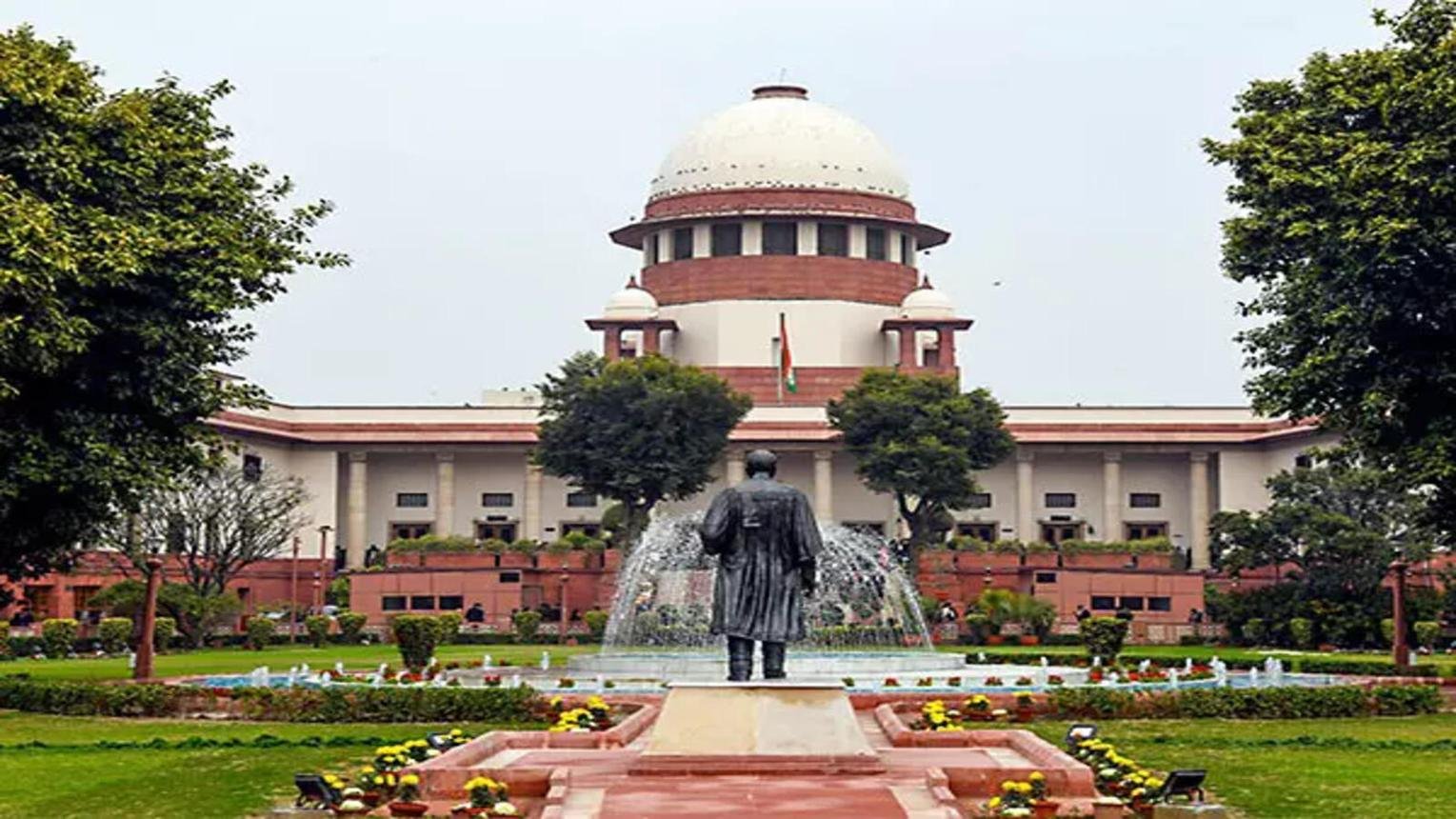
The Supreme Court building in India, featuring a statue and fountain, under a clear sky.
The Supreme Court of India has sought a response from the Central government regarding a petition filed by the Aam Aadmi Party challenging the suspension of its Gujarat unit’s Instagram and Facebook accounts. The case has drawn nationwide attention as it raises significant questions about online censorship, political freedom, and the powers granted under the Information Technology Act.
A bench comprising Justice P.S. Narasimha and Justice Alok Aradhe issued a notice to the Union government while hearing the matter on Friday. The court also decided to tag the petition with similar pending cases related to blocking social media accounts and online content without prior notice to users.
The petition filed by AAP is linked to an ongoing matter titled “Software Freedom Law Center, India vs Union of India,” which questions the legality and transparency of blocking online content and suspending accounts without informing users beforehand. Legal experts believe the outcome of these cases could have a major impact on digital rights and freedom of expression in India.
Senior advocate Shadan Farasat, representing AAP, argued before the court that Section 79(3)(b) of the Information Technology Act cannot be used as a legal tool to block social media accounts. According to him, the provision only deals with the “safe harbour” protection available to intermediaries such as social media platforms and does not authorize authorities to issue blocking orders.
Farasat told the court that the suspension of AAP Gujarat’s social media handles had severely affected the party’s ability to communicate with voters during an important political period. He described the action as urgent and harmful, especially because it happened shortly before local body elections in Gujarat.
The Solicitor General of India, Tushar Mehta, appearing for the Centre, informed the bench that a formal notice to the government might not be necessary and requested that a copy of the petition be directly served to him.
AAP’s Gujarat unit claimed that its Instagram handle “@aapgujarat” and official Facebook page were suspended on April 25. According to reports, the suspension was linked to alleged copyright violations involving the use of clips from Gujarati films in campaign-related content without proper permission.
However, AAP leaders strongly denied any wrongdoing and alleged that the action was politically motivated. The party accused Meta, the parent company of Facebook and Instagram, of acting under pressure from the ruling BJP government. These allegations have added a political dimension to the legal dispute.
In its petition, AAP has requested the Supreme Court to declare that Section 79(3)(b) cannot be used to direct blocking or suspension of online content. The party also challenged the legality of rules, notifications, and directions issued under this provision.
Additionally, AAP has sought access to all records and communications related to the blocking orders allegedly issued to Meta by law enforcement agencies. The party argued that suspending official social media accounts of a registered political party without transparency violates constitutional rights, including freedom of speech and expression.
The petition further requested the court to frame clear guidelines and procedural safeguards for suspending political party accounts on social media platforms. AAP emphasized that such actions should only be taken after prior notice, an opportunity to respond, and written reasons explaining the decision.
Legal observers say the case could become a landmark judgment concerning digital rights, political communication, and government powers over online platforms in India. With elections increasingly influenced by social media campaigns, the outcome of this case may shape how political content is regulated in the future.