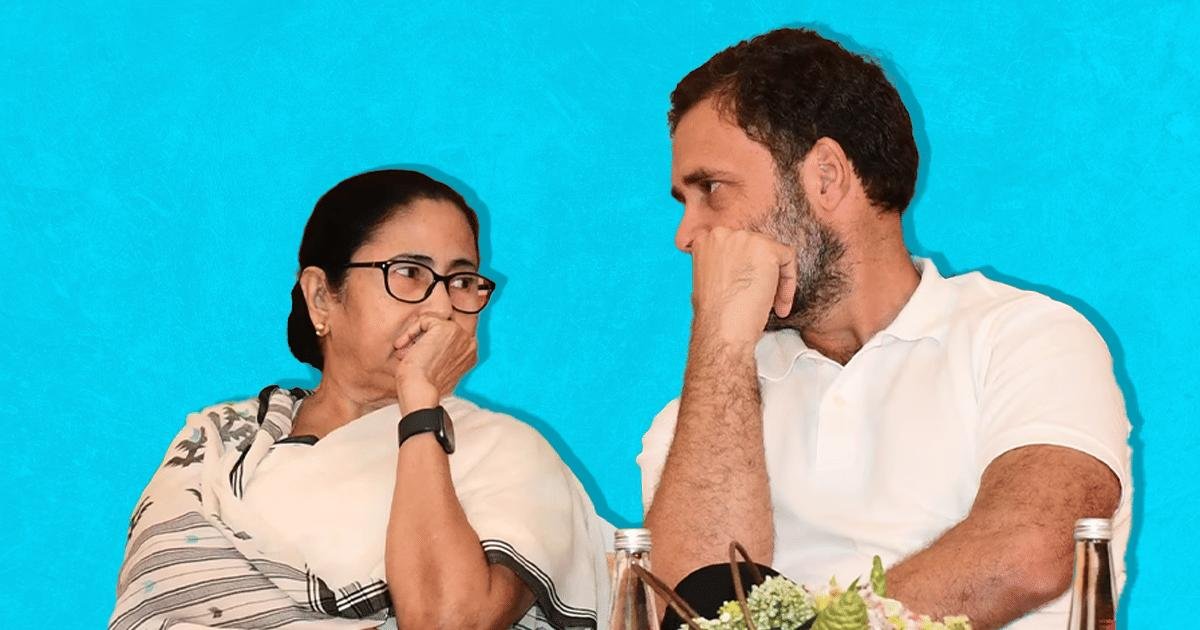
The 2026 Assembly election results have triggered a major political storm across India, with opposition leaders raising serious concerns over the integrity of the electoral process—especially in West Bengal. Rahul Gandhi publicly supported Mamata Banerjee’s allegations, claiming that more than 100 seats were “stolen” during the counting process in the state.
These remarks came after a sweeping victory by the Bharatiya Janata Party (BJP) in West Bengal, where it defeated the ruling Trinamool Congress (TMC) in a historic result. The outcome marked a significant political shift, as Mamata Banerjee had held a strong grip on the state for over a decade. However, the opposition has questioned the legitimacy of this victory, pointing to alleged irregularities during counting.
Rahul Gandhi stated that such patterns were not new, suggesting that similar strategies had been observed in previous elections across states like Madhya Pradesh, Haryana, Maharashtra, and even during the 2024 Lok Sabha polls. His statement has added weight to Mamata Banerjee’s claims, intensifying the debate around electoral transparency and fairness.
Joining the criticism, Akhilesh Yadav also raised concerns about the role of central forces during the counting process. Referring to past elections, he alleged that the misuse of security forces has been a recurring issue, drawing parallels with the 2022 Uttar Pradesh Assembly elections. According to him, the situation in Bengal reflects a broader pattern that needs urgent attention.
The elections themselves were conducted across four states—West Bengal, Tamil Nadu, Kerala, and Assam—along with the Union Territory of Puducherry. Voting took place between April 9 and April 29, with a massive participation of approximately 15.93 crore voters. West Bengal recorded an extraordinary voter turnout of 92.47%, the highest since Independence, highlighting the high level of public engagement.
Apart from Bengal, the results brought significant changes in other regions as well. In Tamil Nadu, actor-turned-politician Vijay made a sensational political debut, with his party Tamilaga Vettri Kazhagam (TVK) disrupting the long-standing dominance of traditional parties like the DMK and AIADMK. In Kerala, the United Democratic Front (UDF) managed to unseat the ruling Left Democratic Front (LDF), marking a shift in power. Meanwhile, the BJP-led NDA retained control in Assam and Puducherry, consolidating its position in those regions.
Despite these diverse outcomes, it is West Bengal that remains at the center of controversy. The allegations of electoral manipulation have sparked a nationwide debate, with opposition parties demanding accountability and greater transparency in the electoral process.
The coming days are likely to witness further political confrontation, as parties may seek legal or institutional intervention to address these concerns. The Election Commission’s response will also be crucial in shaping the narrative and restoring public confidence.while the 2026 elections have reshaped India’s political map, they have also raised important questions about the credibility of the electoral system. With strong voices like Rahul Gandhi, Mamata Banerjee, and Akhilesh Yadav questioning the results, the issue is far from settled. The focus now shifts to how these concerns will be addressed in the interest of democracy.