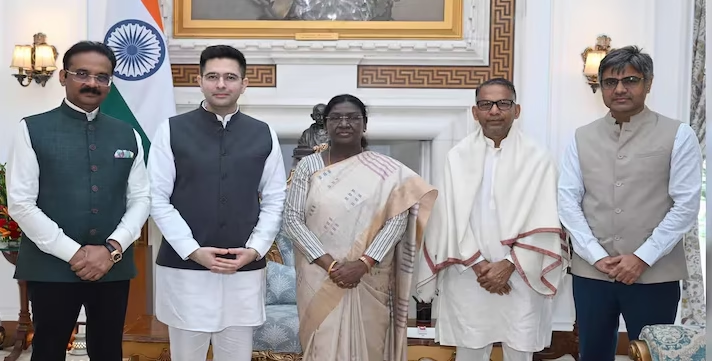
In a sharp escalation of political tensions, Raghav Chadha has accused the Aam Aadmi Party (AAP) of engaging in what he described as “vendetta politics” following the exit of several party members who later joined the Bharatiya Janata Party (BJP). His remarks came after a meeting with Droupadi Murmu, where he, along with other MPs, submitted a formal complaint alleging harassment and misuse of government machinery.
Speaking to the media after the meeting, Chadha claimed that former AAP leaders who chose to leave the party are now being systematically targeted. He argued that individuals who once held respectable positions within the party are now being portrayed negatively simply because they decided to part ways. According to him, this shift in treatment reflects a pattern of political retaliation.
He further alleged that several MPs who transitioned from AAP to the BJP are facing intimidation and coercive actions by state agencies, particularly in Punjab where AAP is in power. Chadha described these actions as politically motivated and warned that such practices undermine democratic values. His statements highlighted concerns about the alleged misuse of administrative bodies for settling political scores.
Citing specific examples, Chadha pointed to incidents involving prominent individuals. He claimed that former cricketer and MP Harbhajan Singh was targeted, with alleged vandalism and hostile actions near his residence. Additionally, he mentioned industrialist and MP Rajendra Gupta, stating that his business operations were disrupted through administrative interventions, including alleged actions by regulatory authorities.
Chadha also raised concerns about legal cases being filed against party members, describing them as baseless and fabricated. He asserted that such cases would not stand scrutiny in court and expressed confidence in the judiciary to dismiss them. According to him, these legal moves are part of a broader strategy to pressure and silence dissenting voices.
In a strongly worded warning, Chadha cautioned the Punjab government against continuing what he termed as the misuse of state machinery. He argued that deploying institutions like the police, vigilance departments, and regulatory boards for political purposes could have serious long-term consequences. He urged officials to act independently and not succumb to political pressure, emphasizing their responsibility to uphold the law impartially.
Taking a swipe at AAP’s ideological stance, Chadha remarked that a party that claims to follow the principles of Mahatma Gandhi is now allegedly deviating from those ideals. He suggested that the public deserves to know how governance structures are being used in political conflicts.
This development marks a significant moment in the ongoing political rivalry between AAP and BJP, particularly in Punjab. The allegations have added a new dimension to the conflict, raising questions about governance, accountability, and political ethics.As the situation unfolds, all eyes will be on how both parties respond and whether these claims lead to further political or legal action. The episode underscores the increasingly intense nature of political competition in India, where party shifts and alliances often bring with them sharp confrontations and serious accusations.