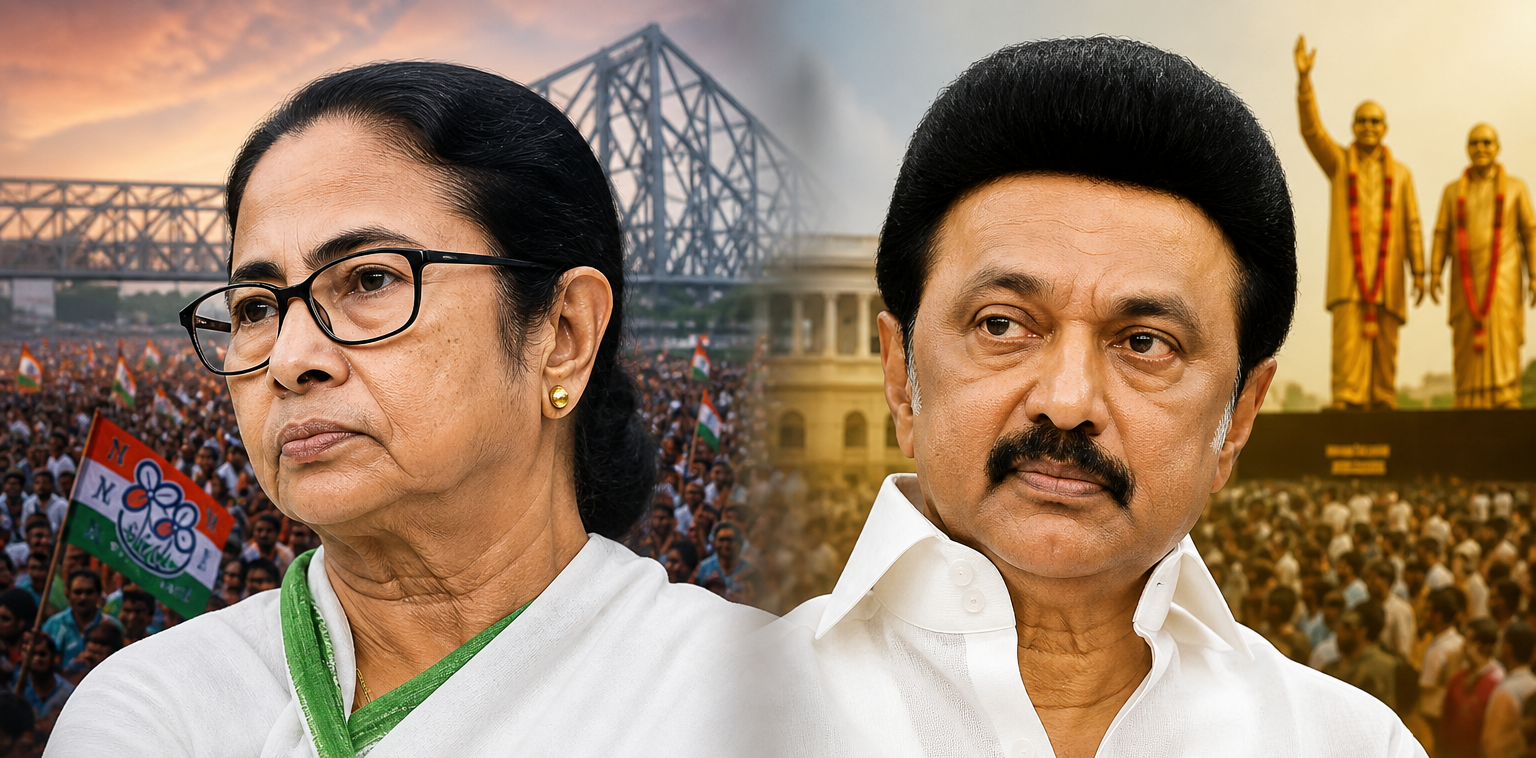
India’s political landscape has undergone a dramatic transformation following the 2026 Assembly elections, with two of the most influential regional leaders Mamata Banerjee and M. K. Stalin facing unexpected defeats in their respective strongholds. These outcomes have not only reshaped state politics but also signaled a broader shift in the balance of power across the country.
In West Bengal, Mamata Banerjee, who had maintained a firm grip on the state for over a decade, saw her dominance challenged and ultimately broken by the Bharatiya Janata Party. The BJP’s consistent growth in the state over the years culminated in a decisive victory, marking a significant milestone in its expansion into eastern India. Banerjee, known for her strong leadership and grassroots connect, responded sharply to the results, raising concerns about the fairness of the electoral process. However, beyond the immediate reactions, the defeat has placed her at a crucial crossroads in her political journey.
The challenge for Banerjee now lies in rebuilding her party, the All India Trinamool Congress, and maintaining unity among its members. Without the backing of government power, her role as an opposition leader will be tested like never before. Observers believe she may return to her core political strategy positioning herself as a defender of Bengal’s identity to regain support and counter the BJP’s growing influence.
Meanwhile, in Tamil Nadu, the setback for MK Stalin came as a surprise. His party, the Dravida Munnetra Kazhagam (DMK), had enjoyed a period of political stability and success in recent elections. However, the sudden emergence of actor-turned-politician Vijay and his party, Tamilaga Vettri Kazhagam (TVK), disrupted the established political order.
Vijay’s entry into politics brought a fresh wave of enthusiasm, particularly among younger voters. His popularity as a film star, combined with promises of change and a modern approach to governance, helped him quickly gain traction. The connection between cinema and politics in Tamil Nadu further amplified his appeal, allowing him to challenge seasoned leaders like Stalin effectively.
For Stalin, the road ahead involves adapting to a new kind of political competition. Unlike traditional rivals, Vijay represents a new-age leader with a different style of engagement and communication. Stalin is expected to reposition himself as a protector of Dravidian values, which remain central to Tamil Nadu’s political identity. However, regaining lost ground will require strategic adjustments and renewed public outreach.
These twin defeats highlight a larger trend in Indian politics voters are increasingly open to change and new leadership. Established leaders can no longer rely solely on past achievements, as emerging forces and shifting voter expectations continue to reshape the electoral landscape.
Despite the setbacks, neither Mamata Banerjee nor MK Stalin is likely to step away from politics. Both leaders have indicated their intent to fight back and remain relevant. Their experience, political networks, and resilience could play a key role in shaping their comeback strategies. the 2026 elections mark a turning point rather than an end. The fall of political strongholds and the rise of new players underline the dynamic nature of democracy in India. As new alliances form and strategies evolve, the coming years promise intense political action, with both seasoned leaders and fresh faces competing for influence and power.