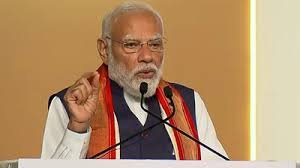
Indian Prime Minister Narendra Modi addressing the nation about the gold purchase restriction.
Prime Minister Narendra Modi recently sparked a nationwide debate after urging Indians to voluntarily avoid buying gold for one year. Speaking at a public rally in Hyderabad, PM Modi said the country needs to use foreign exchange reserves carefully due to the ongoing global economic uncertainty and tensions in West Asia. His comments quickly became a major talking point across political and economic circles.
India is one of the largest importers of gold in the world. More than 90 percent of the country’s annual gold requirement is fulfilled through imports from other countries. During wedding seasons and festivals, gold purchases rise sharply across the country. While gold holds emotional and cultural value for Indian families, the increasing demand also leads to a massive outflow of foreign currency, especially US dollars.
According to economic experts, gold and crude oil imports account for a significant portion of India’s import expenses. As international gold prices continue to rise, the country has to spend more dollars to import the same quantity of gold. This increases pressure on India’s foreign exchange reserves and widens the trade deficit. PM Modi’s suggestion is being seen as an attempt to reduce unnecessary imports and protect the economy during uncertain global conditions.
During his speech, the Prime Minister also appealed to people to reduce fuel consumption. He encouraged citizens to use metro rail services, adopt carpooling, increase the use of electric vehicles, and use railway services for parcel transportation. He even suggested work-from-home practices wherever possible to reduce fuel usage. According to the government, these measures can help India save valuable foreign exchange reserves.
India heavily depends on imports for both crude oil and gold. Whenever global prices rise, the impact is directly felt on the Indian economy. The country then needs to spend more foreign currency to meet domestic demand. If imports increase faster than exports, the current account deficit widens, creating economic pressure on the government.
Reports suggest that India imported massive quantities of gold during the last two financial years. Even though the volume of gold imports slightly decreased in some months, the overall import bill increased because of record-high international prices. As a result, the government had to spend billions of dollars on gold imports alone.
India mainly imports gold from countries like Switzerland, the United Arab Emirates, and South Africa. Since global gold prices are currently at record highs, the domestic gold market has also witnessed a sharp increase in prices. This has affected both consumers and jewelers across the country.
PM Modi’s statement is also being viewed from a political angle. Some experts believe the Prime Minister is preparing the public for possible economic challenges in the coming months. Others feel the appeal is aimed at promoting financial discipline and encouraging responsible spending habits among citizens.
However, gold is deeply connected to Indian culture and traditions. In many households, gold is not just considered jewelry but also a long-term investment and a symbol of financial security. Weddings, festivals, and family celebrations are often associated with gold purchases. Because of this emotional and cultural attachment, it remains to be seen how much impact PM Modi’s appeal will actually have on public buying behavior.
For now, the Prime Minister’s comments have successfully started a nationwide discussion about India’s economy, imports, and the importance of managing foreign exchange reserves carefully during global uncertainty.