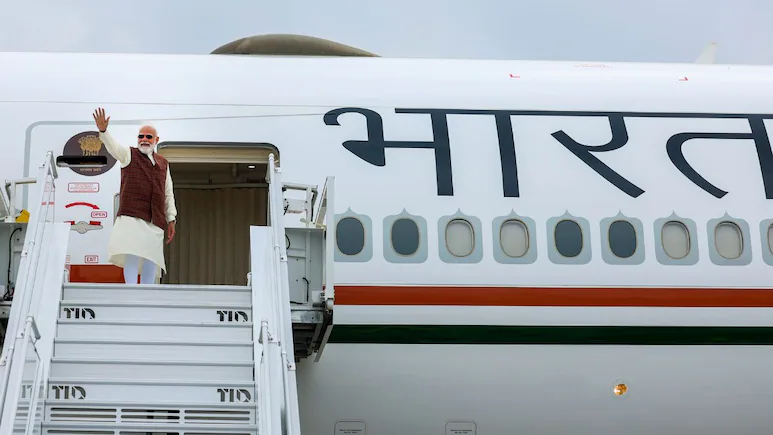
Prime Minister Narendra Modi’s recent visit to Sweden has marked a major milestone in India-Europe relations, with India and Sweden officially elevating their ties to a Strategic Partnership. The development is being viewed as far more than a routine diplomatic event. Political analysts and economic experts believe the visit represents a significant step toward strengthening India’s role in global technology, manufacturing, and innovation partnerships.
During the visit to Gothenburg, PM Modi met Swedish Prime Minister Ulf Kristersson and European Commission President Ursula von der Leyen. The leaders jointly announced a new India-Sweden Action Plan for the period 2026-2030, focusing on strategic cooperation across multiple sectors. The partnership aims to strengthen collaboration in artificial intelligence, defence manufacturing, clean energy, semiconductors, digital infrastructure, critical minerals, and sustainable technologies.
The strategic partnership comes at a time when global geopolitics is rapidly changing. The Russia-Ukraine war, tensions in the Middle East, and uncertainties in global supply chains have pushed many European countries to look for reliable economic and technological partners. India is now emerging as a trusted manufacturing and innovation hub for Europe, while Sweden is seen as an important gateway for India into the European market.
One of the biggest highlights of the partnership is the focus on technology transfer and joint manufacturing. Sweden is globally known for its strengths in telecom, clean energy, mobility, defence systems, mining technology, and life sciences. Instead of depending only on imports, India is now aiming for co-development and co-manufacturing with Swedish firms under initiatives such as “Make in India.” Swedish companies are also expected to increase their investments in India’s growing industrial ecosystem.
Another important development is the Sweden-India Technology and AI Corridor (SITAC). This initiative will connect startups, research institutions, universities, and industries from both countries. The corridor is expected to support cooperation in AI, 6G communication, semiconductors, quantum computing, and advanced digital technologies. Experts believe this move directly complements India’s ambitions under its AI Mission and semiconductor manufacturing plans.
The partnership also places strong emphasis on green transition and sustainability. Sweden’s expertise in electric vehicles, green hydrogen, smart cities, and sustainable mining aligns closely with India’s environmental and clean energy goals. In addition, both countries have agreed to deepen cooperation in the space sector, with Swedish agencies expected to contribute to India’s upcoming Venus Orbiter mission.
Trade and investment are expected to grow significantly over the next few years. Swedish Prime Minister Kristersson announced a shared goal of doubling bilateral trade and investment within five years. Currently, bilateral trade between India and Sweden stands at nearly $7.75 billion, while more than 280 Swedish companies already operate in India. Experts believe the upcoming India-European Union Free Trade Agreement will further accelerate economic cooperation between the two nations.
Although Sweden is a relatively small country in terms of population, it is considered a global technology powerhouse. Its strengths in telecom, clean mobility, aerospace, defence electronics, and smart infrastructure make it a highly valuable strategic partner for India’s long-term economic vision leading up to 2047.