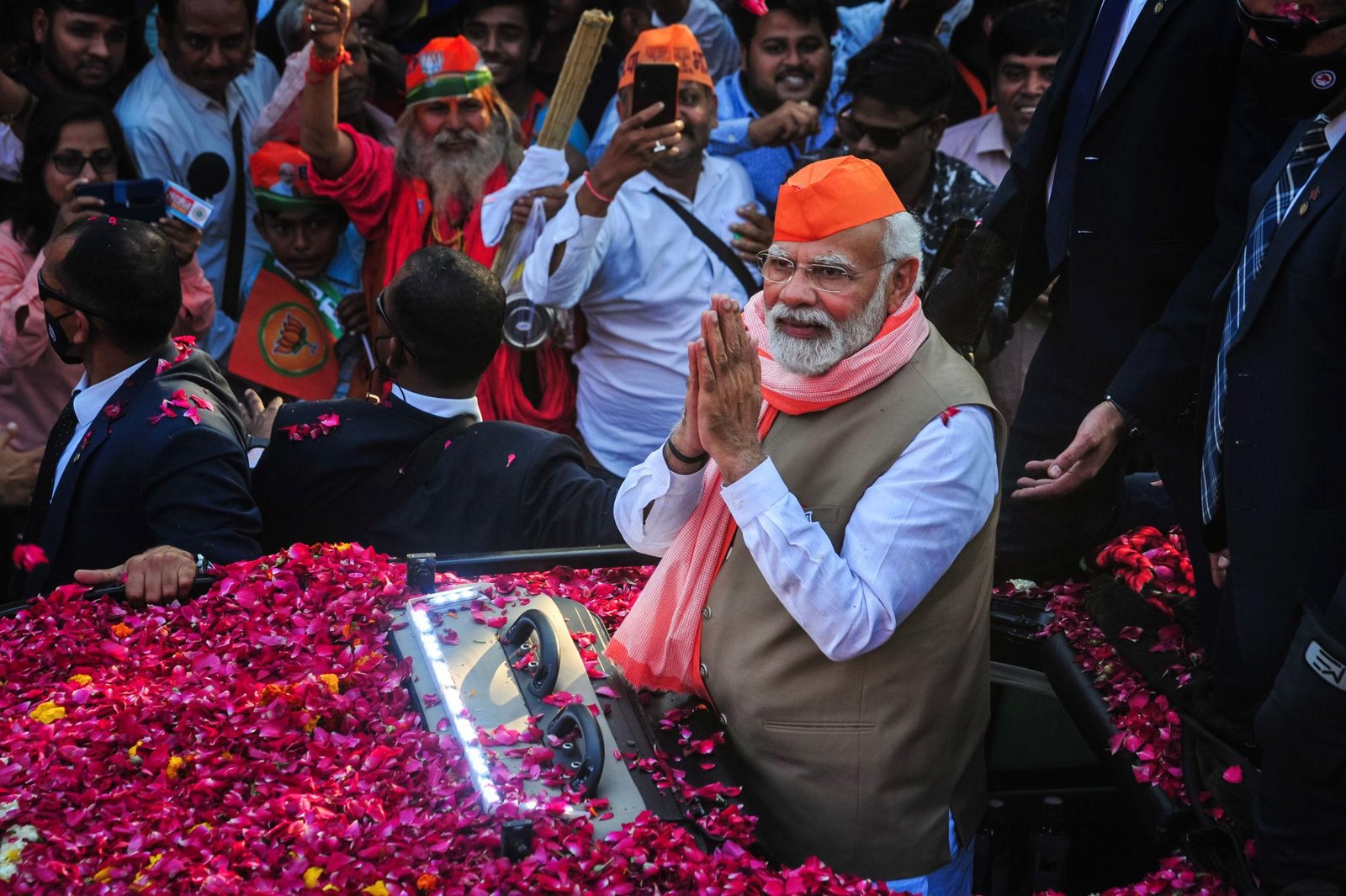
Prime Minister Narendra Modi’s two-day visit to Varanasi, his parliamentary constituency, is being closely watched not just for its official agenda but also for its underlying political significance. Scheduled for April 28 and 29, the visit combines major development announcements with a carefully crafted outreach programme, especially targeting women voters.
One of the key highlights of the visit is the “Jan Aakrosh Mahila Sammelan,” a large gathering expected to see participation from around 50,000 women. The event is designed as a platform to discuss issues such as women’s safety, empowerment, dignity, and economic independence. Notably, the entire event—from organisation to security arrangements—is being handled by women, reinforcing the message of women-led participation.
Political observers see this event as more than just a social initiative. Its timing coincides with ongoing elections in West Bengal and comes at a moment when the central government’s attempt to pass the women’s reservation bill faced hurdles. The Bharatiya Janata Party (BJP) has accused opposition parties of blocking the move, and the Varanasi event is being viewed as an effort to highlight the party’s commitment to women’s empowerment.
Apart from the political messaging, the visit also includes a strong focus on development. Prime Minister Modi is set to launch and lay the foundation for 163 projects worth over ₹6,300 crore. These projects cover a wide range of sectors, including road infrastructure, railway overbridges, drinking water facilities, healthcare, and urban development.
Among the major initiatives are the expansion of the Varanasi-Azamgarh road into a four-lane highway, construction of a railway overbridge near Kazzakpura, and implementation of rural drinking water schemes under the Jal Jeevan Mission. Additionally, a sewage treatment plant is being developed in Bhagwanpur to improve sanitation and environmental conditions.
Healthcare is another area receiving attention during this visit. Plans include the construction of a new hospital in Cholapur and upgrades to the trauma centre at Banaras Hindu University. These initiatives aim to strengthen healthcare infrastructure in the region and improve access to medical services.
Tourism-related projects are also part of the development agenda. Efforts are being made to redevelop ghats and enhance facilities around religious sites, further boosting Varanasi’s status as a major cultural and spiritual destination. In addition, two new Amrit Bharat Express trains will be flagged off, improving connectivity between Varanasi and cities like Pune and Mumbai via Ayodhya.
The visit also includes religious and political engagements. On April 29, Prime Minister Modi is scheduled to visit the Kashi Vishwanath Temple to offer prayers. He may also hold meetings with party leaders and public representatives, strengthening political coordination at the grassroots level.
The political context of the visit is significant. With assembly elections approaching in Uttar Pradesh next year, the BJP is actively shaping its campaign narrative. Women voters are seen as a crucial segment, and events like the Mahila Sammelan serve to reinforce the party’s outreach while showcasing its organisational strength.
At the same time, opposition parties such as the Samajwadi Party and Congress have questioned whether the emphasis is more on symbolism than actual policy implementation. They have raised concerns about broader issues like social justice and reservation policies.
Prime Minister Modi’s Varanasi visit reflects a strategic blend of governance and politics. By combining development initiatives, religious outreach, and targeted voter engagement, the BJP appears to be setting the tone for upcoming electoral battles while reinforcing its connection with key voter groups.